

ADHD, OCD and Soulmates Part 5
Hope, for me, used to mean believing in a perfect person who would make all the pain make sense. These days, hope looks smaller and sturdier.
I don’t need a soulmate to validate that I’m worthy. I do, however, still want someone to share the good coffee, the stupid jokes, the quiet evenings, and the occasional existential crisis.
ADHD, OCD and Soulmates Part 4
For years my favorite story about myself was simple: I’m a great guy who just hasn’t met the right person.
It explained everything—bad breakups, messy marriages, why I was always exhausted from trying so hard. Then one day a doctor asked me a few questions and said, ‘Have you considered ADHD?’
Suddenly ‘great guy’ wasn’t the whole picture. That intense devotion? A lot of it was hyperfocus. The grand gestures and fast commitments? Impulsivity in a nice shirt. The panic when someone pulled away? Rejection sensitivity on full blast.
Getting that word didn’t excuse my choices—but it finally explained the script I kept repeating in every relationship.
Sometimes the label doesn’t limit you.
It just explains the chaos.
ADHD, OCD and Soulmates Part 3
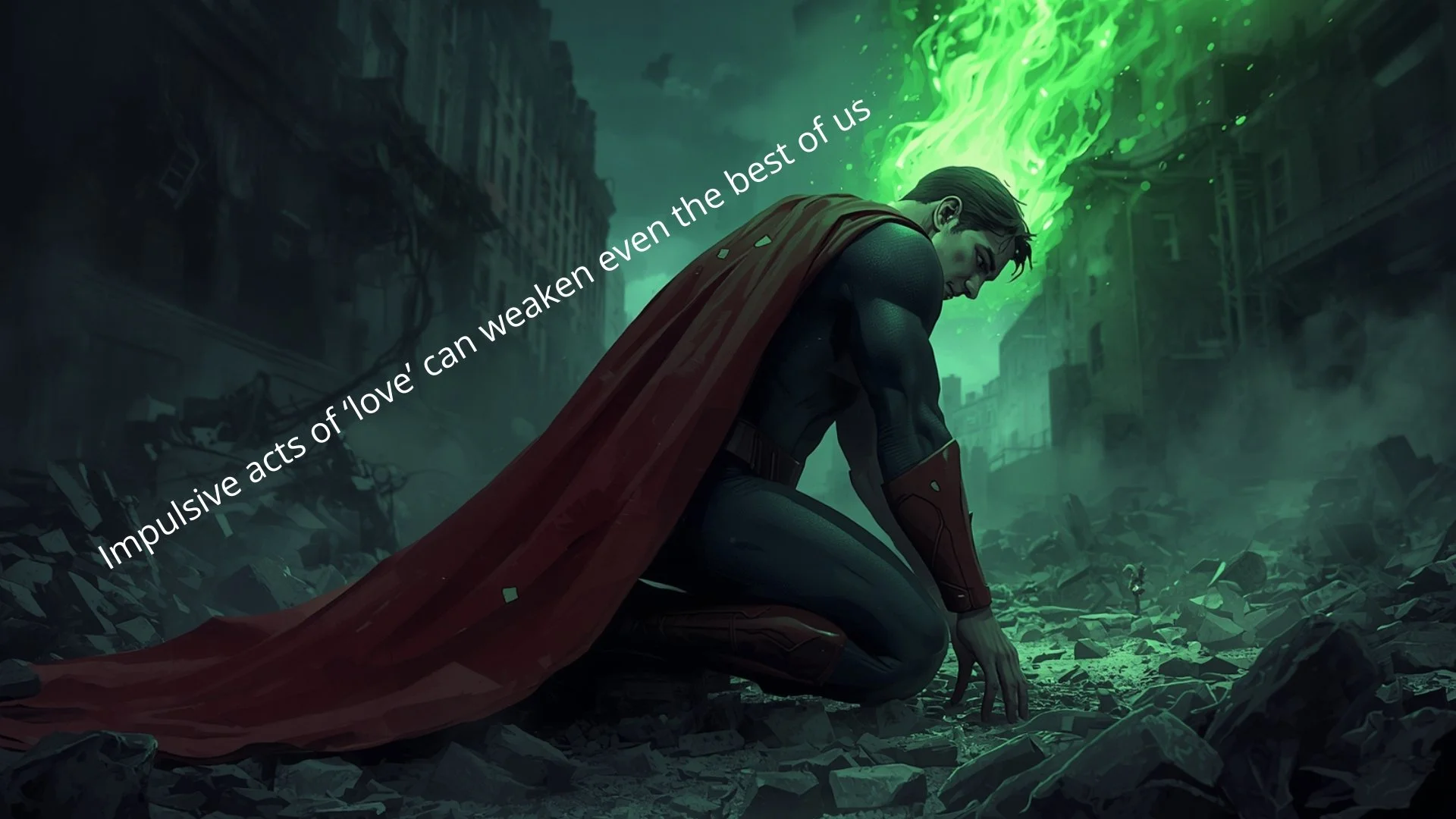
I used to think my love language was grand gestures. Looking back, it was more like crisis management.
When things got tense, my first instinct was to go big: an expensive trip, a huge gift, a massive sacrifice I absolutely couldn’t afford. If I pulled it off, we got a week of peace and I got to feel like the hero.
For an ADHD brain high on limerence, that rush is addictive. You don’t just fix a problem—you save the relationship. You save her. You save your role as ‘the good man.’
The bill always came later: in money, in resentment, in the quiet realization that I was performing love instead of living it.
Being the hero feels powerful—until you realize you’ve never learned how to just be a partner.
Love is built
Modern love sells fairy tales: soulmates, destiny, perfect timing.
But lasting connection usually looks less magical—and far more intentional.
This piece explores the quiet truth: love isn’t found… it’s built.
Soulmate or Cellmates
What if the biggest myth in modern romance is “The One”?
This Cynical Romantic series explores soulmate culture, cosmic coincidences, and why compatibility, consistency, and boundaries matter more than destiny.

A Cynical Romantic’s Guide to Digital Love
Dating apps promised convenience. Instead, they created a new language of ghosting, swiping, and mixed signals.
This guide explores how to keep your heart—and your sanity—while searching for connection online.

It’s Not Spring
It’s January. The sky is gray. My coffee is cold.
And somehow… hope showed up anyway.
I don’t trust it.
But I’m not pushing it away either.

The Art of Falling
Love doesn’t follow rules—it follows weather patterns.
In this series, The Cynical Romantic explores the seasons of relationships: the hopeful springs, chaotic summers, honest autumns, and the quiet winters where truth finally shows up.
Love in the Age of Good Enough
“Love’s not a fairy tale; it’s a black-hole experiment. You dive in, get stretched across galaxies, and still say, ‘Let’s do that again.’
Because for all the sarcasm, there’s still that part of us that wants the connection, the laughter mid-eye-roll, the ‘Fine, one more try.’”

Summer: Passion, Tan Lines, and the Threat of Dehydration
Summer romance moves fast: dopamine spikes, flirty texts, and emotional heatwaves.
In this Love Forecast edition, The Cynical Romantic explores why passion often outruns self-care — and how to survive love’s hottest season.

Why Newton’s First Law Explains Your Dating Life
Dating inertia is real: we stay stuck in bad relationships or rocket into new ones at dangerous speeds.
The Cynical Romantic uses Newton’s First Law to explain ghosting, dopamine momentum, and the physics of modern romance.

The String Theory of Us
Love runs on frequencies we pretend we don’t notice—until one text, one sigh, or one forgotten emoji sends our nervous system into orbit. String Theory of Us breaks down why relationships feel cosmic, chaotic, and occasionally worth the Nobel Prize.

Thanks for the “almost"
Not every almost-relationship was a mistake. Some were lessons disguised as heartbreak.
In this reflective post, The Cynical Romantic explores gratitude for the fleeting connections that shaped us — even if they never stayed.

E=mc² or Love = Messy Commitment Squared
Love isn’t logical—but it is full of energy. In “Love in the Time of Einstein,” The Cynical Romantic puts E=mc² under the microscope (and maybe a wine glass) to explain why relationships combust, collapse, and occasionally defy gravity. From IKEA-induced meltdowns to passion that burns hotter than a Bunsen flame, this witty breakdown of Einstein’s most famous equation proves that love and physics share one inconvenient truth: both can blow up without warning. If you’ve ever lost track of time with someone—or endured a breakup that felt like a small nuclear event—this one’s for you. Equal parts humor, heartbreak, and half-baked science, it’s your cosmic permission slip to stop trying to “balance” love’s equation and start laughing at its chaos.

Vampires, Werewolves, and Exes—Oh My!
Welcome to Love, Lies & Scandals: Haunted Hearts Week, where romance meets the supernatural—and not in the sexy vampire way. In “Vampires, Werewolves, and Exes—Oh My!”, The Cynical Romantic dives into the monsters of modern dating, from the love-bombing vampire who drains your energy to the midnight-texting werewolf who disappears by sunrise. It’s witty, self-aware relationship commentary for anyone who’s ever mistaken chemistry for compatibility or ignored red flags that could light a runway. With a dash of psychology, a sprinkle of sarcasm, and a whole lot of emotional garlic, this post helps you spot the warning signs before they sink their teeth in. Think of it as your candlelit survival guide to spooky season romance—equal parts humor, heartbreak, and hard truth.