
The Yellow Brick Road Gets Shorter as We Age: Love, Regret, and Real Connection
A reflective, sharp, and quietly hopeful series on love, aging, regret, and emotional growth. Told through the voice of The Cynical Romantic, this 11-part journey explores relationships, fear, comfort, and what it means to keep choosing love as time becomes more finite.

Quirks and quarks
At 5:34 a.m. I woke up thinking about quirks and quarks—and realized they might be the same thing.
The tiny habits we hide often reveal more about us than the grand stories we tell.

Spring: The Forecast Calls for Flirtation
Here’s the inconvenient truth about Spring love: it can feel like growth when it’s really just cleverly disguised performance art. Are you actually building roots with this person, or are you both curating a version of yourselves that looks good in natural lighting?
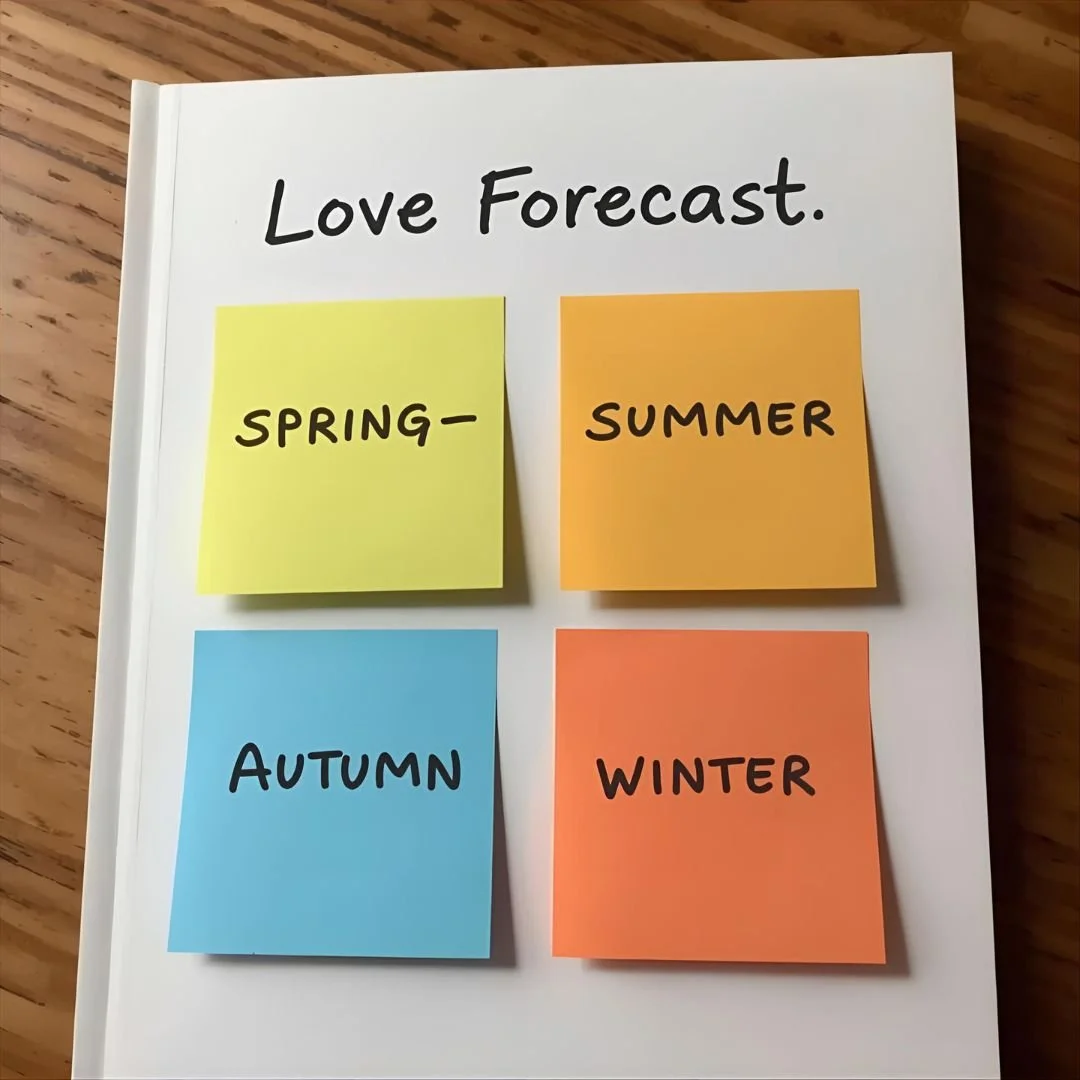
Field Guide to Love’s Seasons
Love has weather patterns: hopeful springs, chaotic summers, honest autumns, and quiet winters.
In this series, The Cynical Romantic tracks the emotional seasons of relationships — and why every heart eventually experiences them all.

Why Newton’s First Law Explains Your Dating Life
Dating inertia is real: we stay stuck in bad relationships or rocket into new ones at dangerous speeds.
The Cynical Romantic uses Newton’s First Law to explain ghosting, dopamine momentum, and the physics of modern romance.

The Friends Who Heal You
Romantic love may light the fireworks, but friendship is the team that shows up afterward with wine, carbs, honesty, and questionable advice. This post explores why your people are the real soulmates — and why healing is a group sport.

The String Theory of Us
Love runs on frequencies we pretend we don’t notice—until one text, one sigh, or one forgotten emoji sends our nervous system into orbit. String Theory of Us breaks down why relationships feel cosmic, chaotic, and occasionally worth the Nobel Prize.

Thanks for the “almost"
Not every almost-relationship was a mistake. Some were lessons disguised as heartbreak.
In this reflective post, The Cynical Romantic explores gratitude for the fleeting connections that shaped us — even if they never stayed.

💔 Apology, Forgive, and Forgiveness
They say “time heals all wounds,” but time also runs late, forgets birthdays, and occasionally ghosts you mid-text. In “Apology, Forgive, and Forgiveness,” The Cynical Romantic unpacks the holy trinity of emotional chaos — the apology that misses the point, the forgiveness that takes forever, and the grace we forget to give ourselves.
This isn’t a lecture; it’s therapy in high heels. You’ll meet psychologists, philosophers, and a few uncomfortable truths about how accountability, compassion, and sarcasm can coexist in the same human heart. Whether you’re the one saying sorry or the one deciding not to, this is a reminder that peace isn’t something others hand you — it’s something you claim between heartbreaks.
And yes, there’s humor. Because without it, we’d all still be crying over people who think “sorry” counts as emotional depth.