
Romantic misadventures welcome.
Shop Cupid’s Last Stand for humor-filled apparel, cozy hoodies, and gifts that say what love really feels like.

Managing ADHD and OCD later in life changes how you see everything — your past, your habits, your relationships, and the way your brain has always worked.
In this week’s Do Better. Be Better. post, I share what it was like being diagnosed with ADHD and OCD in my 60s — and how I stopped fighting my mind and started building systems that actually work with it.
This isn’t advice or therapy. It’s a personal story about memory fog, asking too many questions, living inside creative chaos, and finally understanding why structure feels like freedom.
If you’ve ever thought, “Why does my brain work like this?” — you’re not alone.

WELCOME TO LOVE, LIES & SCANDALS
(Where passion meets poor judgment — and clarity sometimes shows up late.)
This week’s featured post isn’t about love gone wrong.
It’s about the brain behind the blog.
After being diagnosed with ADHD and OCD later in life, I finally understood why my mind works the way it does — why structure feels like safety, why verbal instructions disappear into fog, and why I ask so many damn questions.
This isn’t a how-to.
It’s a personal story about learning to work with my brain instead of fighting it.
If you’ve ever wondered why life feels harder than it should — or why your mind refuses to follow “normal” rules — start here.
👉 Do Better. Be Better. | ADHD & OCD
Welcome back.
Let’s wander into the chaos — with a little more clarity this time.
✨
A Christmas Tree Thought Ruined my
Some workouts end with sweat.
Others end with a single thought that quietly hijacks your entire nervous system.
This week’s story starts on a treadmill and ends with a Christmas tree — and everything that invisible detour reveals about ADHD, responsibility, and the exhausting effort of trying to “stay on task.” What looks like inconsistency from the outside is often emotional labor on overdrive inside the brain.
This piece isn’t about fitness.
It’s about how small thoughts reroute entire days, why intentions dissolve without laziness being involved, and how executive function collapses under emotional responsibility — especially for adults with ADHD or OCD.
If you’ve ever wondered why plans derail, workouts end early, or focus vanishes for reasons that don’t make sense… this one’s for you.
It’s honest. It’s human.
And yes — I stepped off the treadmill early, and I noticed.
✨ Do Better. Be Better.: The ADHD & OCD Series
Why We Say The Wrong Thing — I didn’t realize until writing this post how many of my “communication quirks” were actually symptoms of ADHD and OCD. I just thought I was… socially spicy. Turns out the brain has more influence on our words than we give it credit for. If you’ve ever felt broken because you can’t say the “right thing,” you aren’t. You’re human. And your brain is trying its absolute best.
✨ The Four Season’s of LOve
Love changes like weather — suddenly, dramatically, and often without warning. This five-part LL&S series breaks down spring sparks, summer heat, autumn reckonings, and winter truths. Expect humor, science, vulnerability, and at least one emotional cold front you didn’t see coming.
🛠️ NEW: The “Tools We Love” Page
Oh yes, we finally did it.
A curated list of tools that help manage ADHD, OCD, anxiety spirals, decision fatigue, and other “quirks” we didn’t sign up for but definitely live with.
They’ve worked wonders for me, and I genuinely hope they help you, too.
Also… they make fantastic Christmas gifts for the people you love or the siblings you tolerate.
(Joking, of course.)
((Or am I?))
So grab your comfort drink, pretend you’re emotionally stable, and dive into this week’s stories. New posts every Sunday, new confessions every day, and possibly a few shiny affiliate links I enthusiastically stand by.
💬 Tell me what hit too close to home.
❤️ Subscribe — it’s cheaper than therapy.
🛍️ And yes, clicking links does count as emotional support shopping.
This site contains affiliate links (FULL DISCLOSURE) — including Amazon Associates — which means as an Amazon Associate, I earn from qualifying purchases. It doesn’t cost you anything extra… unless you panic-buy three self-help books at 2 a.m.
(We’ve all been there. No judgment.)

A little science, a little sunshine, zero judgment if you use it while binging true crime.
660 nm + 850 nm wavelengths for mood, skin glow, and winter reset energy.
TCR’s Little Ray of Realistic Sunshine
Red-light therapy that brightens your skin and your whole outlook.
👉Shop on Amazon

— The Cynical Romantic
“I still believe in love — I just think love and I are seeing other people right now.”
In This Edition
the cynical romantic
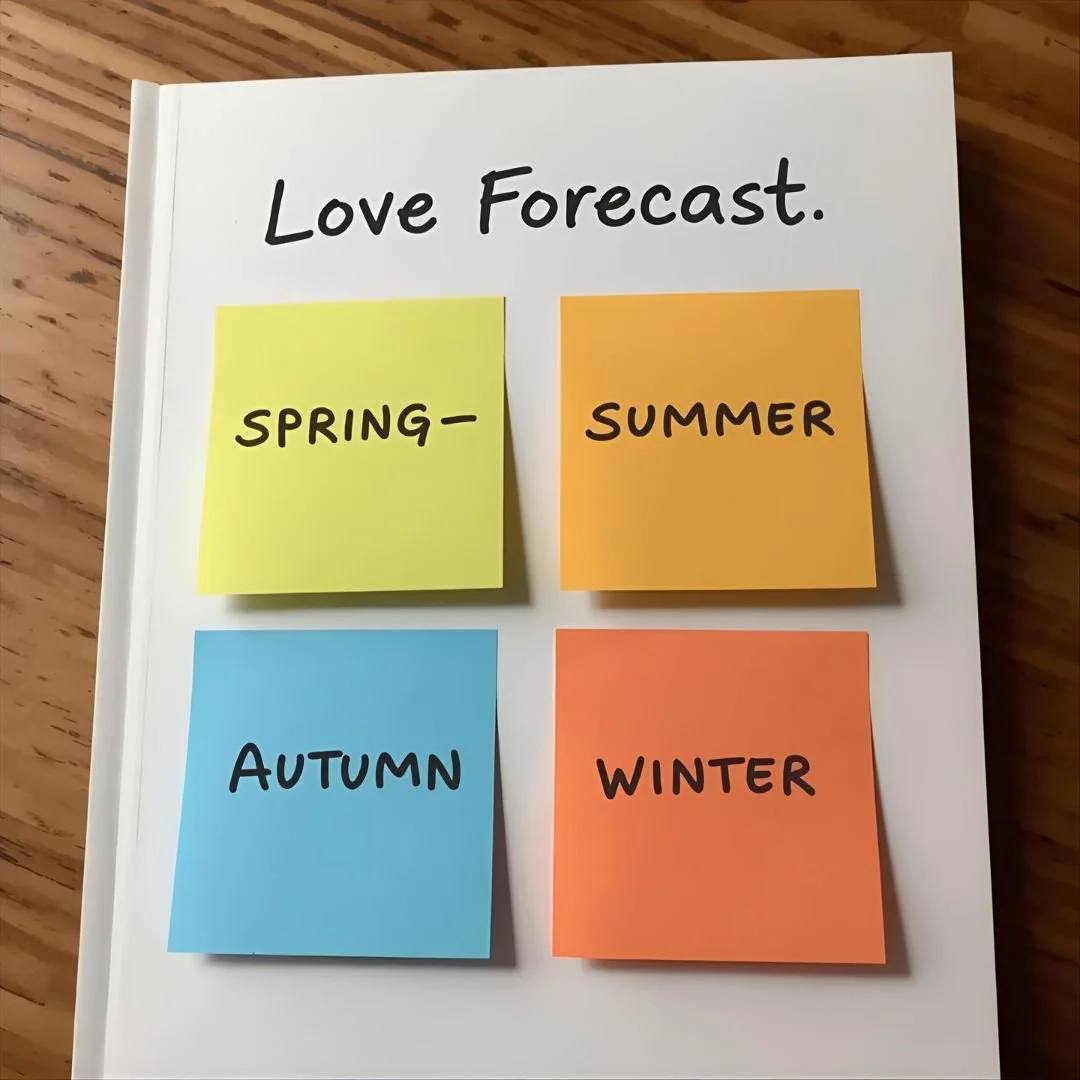
Love doesn’t follow rules. It follows weather patterns.
Welcome to “The Love Forecast Series”, where The Cynical Romantic unpacks the four seasons of the human heart — from spring’s delusional blooms to summer’s emotional heatwaves, from autumn’s quiet truths to winter’s painfully honest stillness.
This is not your grandmother’s poetic seasonal metaphor. This is the LL&S version: grounded, messy, lightly tragic, occasionally hopeful, and always self-aware.
Over five posts, we explore how relationships shift, wilt, revive, collapse, and somehow regenerate even when we swear we’re done. There’s humor, science, vulnerability, and at least one moment where you’ll think, “Oh… I’ve lived that forecast.”
Whether you’re newly in love, newly out of love, or permanently weather-worn, this series tracks the storms, the sunshine, and the emotional microbursts we call connection.

Thanks for the almost’s
Apologies are easy. Forgiveness is hard. But gratitude? That’s an Olympic sport. This Thanksgiving, I’m giving thanks for the ones who ghosted gracefully—because sometimes closure looks like finally laughing about it.
The ADHD and OCD Series
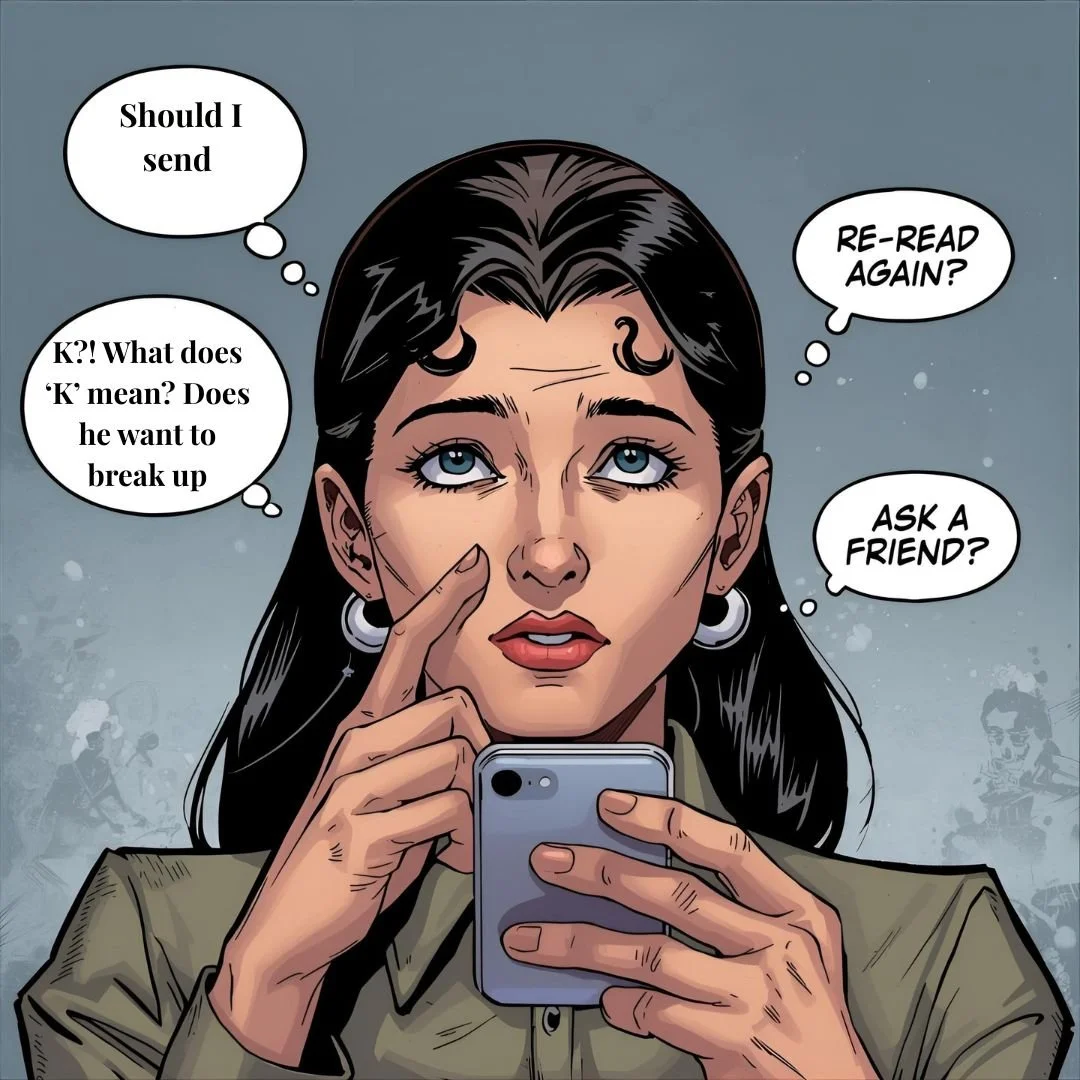
Why we say the wrong things
Communication with ADHD or OCD is an adventure — often unplanned, occasionally chaotic, and always memorable. This week, The Cynical Romantic confesses the worst communication fails, breaks down why neurodivergent brains react the way they do, and shares expert-backed strategies for calming the chaos. If you’ve ever sent a catastrophic text, apologized with a meme, or blurted something deeply unhelpful at the worst possible moment… welcome home.
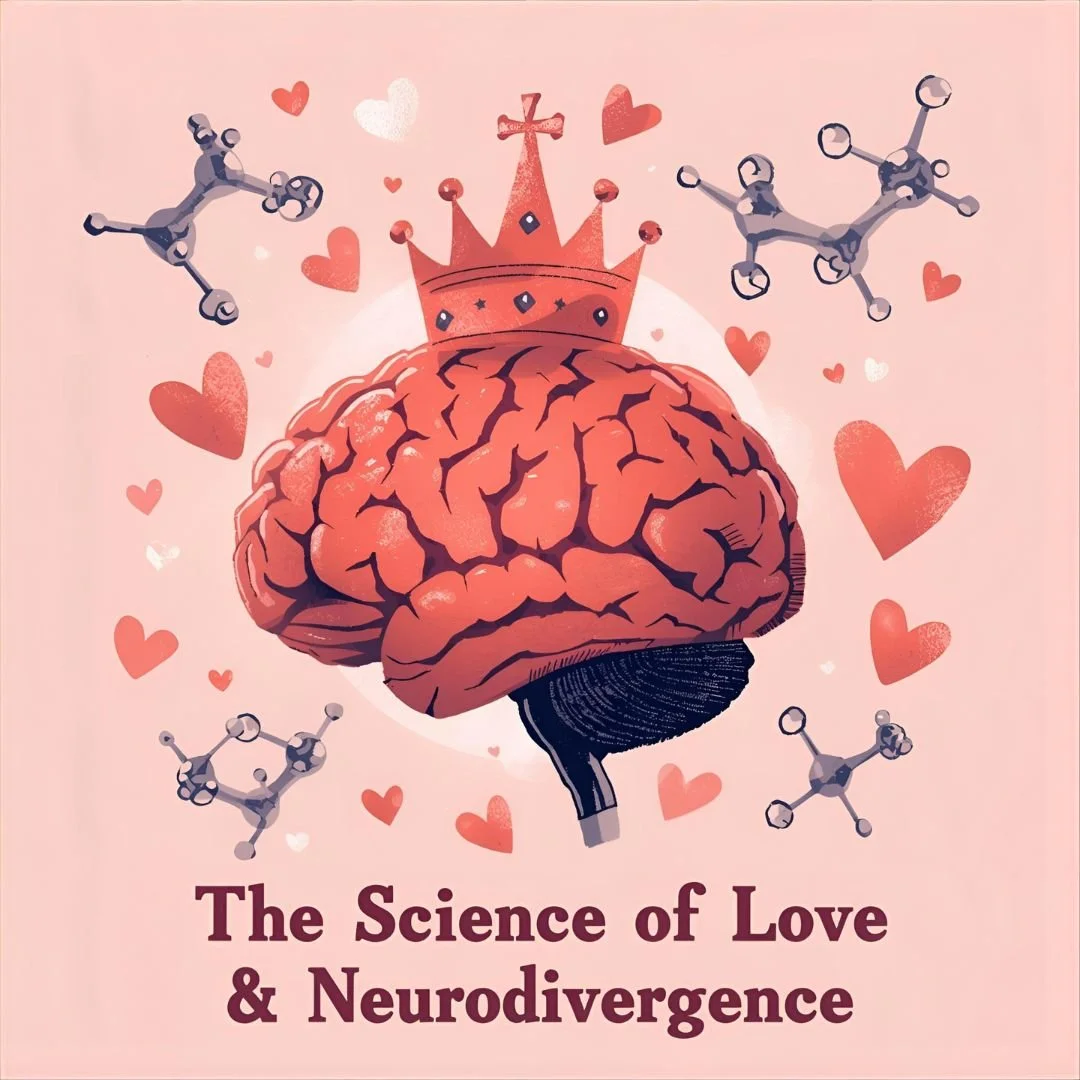
Neurodivergent brains make romance… interesting. This week, The Cynical Romantic unpacks the wild dance of dopamine, serotonin, intrusive thoughts, and emotional misfires that shape ADHD/OCD relationships. From mismatched brain chemistry to overthinking text messages, this post explores why love can sometimes feel like science gone wrong — and why it’s not your fault. If you’ve ever replayed a conversation 47 times or forgotten your own birthday dinner because you hyperfocused on reorganizing the spice rack, this one’s for you. Learn the research, laugh at the chaos, and discover why you might actually be wired for love — just… differently.

Love isn’t logical—but it is full of energy. In “Love in the Time of Einstein,” The Cynical Romantic puts E=mc² under the microscope (and maybe a wine glass) to explain why relationships combust, collapse, and occasionally defy gravity. From IKEA-induced meltdowns to passion that burns hotter than a Bunsen flame, this witty breakdown of Einstein’s most famous equation proves that love and physics share one inconvenient truth: both can blow up without warning. If you’ve ever lost track of time with someone—or endured a breakup that felt like a small nuclear event—this one’s for you. Equal parts humor, heartbreak, and half-baked science, it’s your cosmic permission slip to stop trying to “balance” love’s equation and start laughing at its chaos.
LOve and the Law of Physics

Love runs on frequencies we pretend we don’t notice—until one text, one sigh, or one forgotten emoji sends our nervous system into orbit. String Theory of Us breaks down why relationships feel cosmic, chaotic, and occasionally worth the Nobel Prize.
Only by doing better will you be better. Catch on past blog post on emotional, physical and mental issues and how yours truly-The Cynical Romantic- faces these issues. Therapy, Research and Wine. Not in that order!