
Late ADHD & OCD Diagnosis at 64
How I Finally Learned to Work With My Brain, and The Systems That Finally Made Life… Make Sense
I Was Diagnosed With ADHD and OCD in March of 2023 — And Everything Clicked
Alright. This is me talking to you, one-on-one. Not as an expert. Not as a guide. Not as someone with a tidy checklist laminated and tucked into a leather folio.
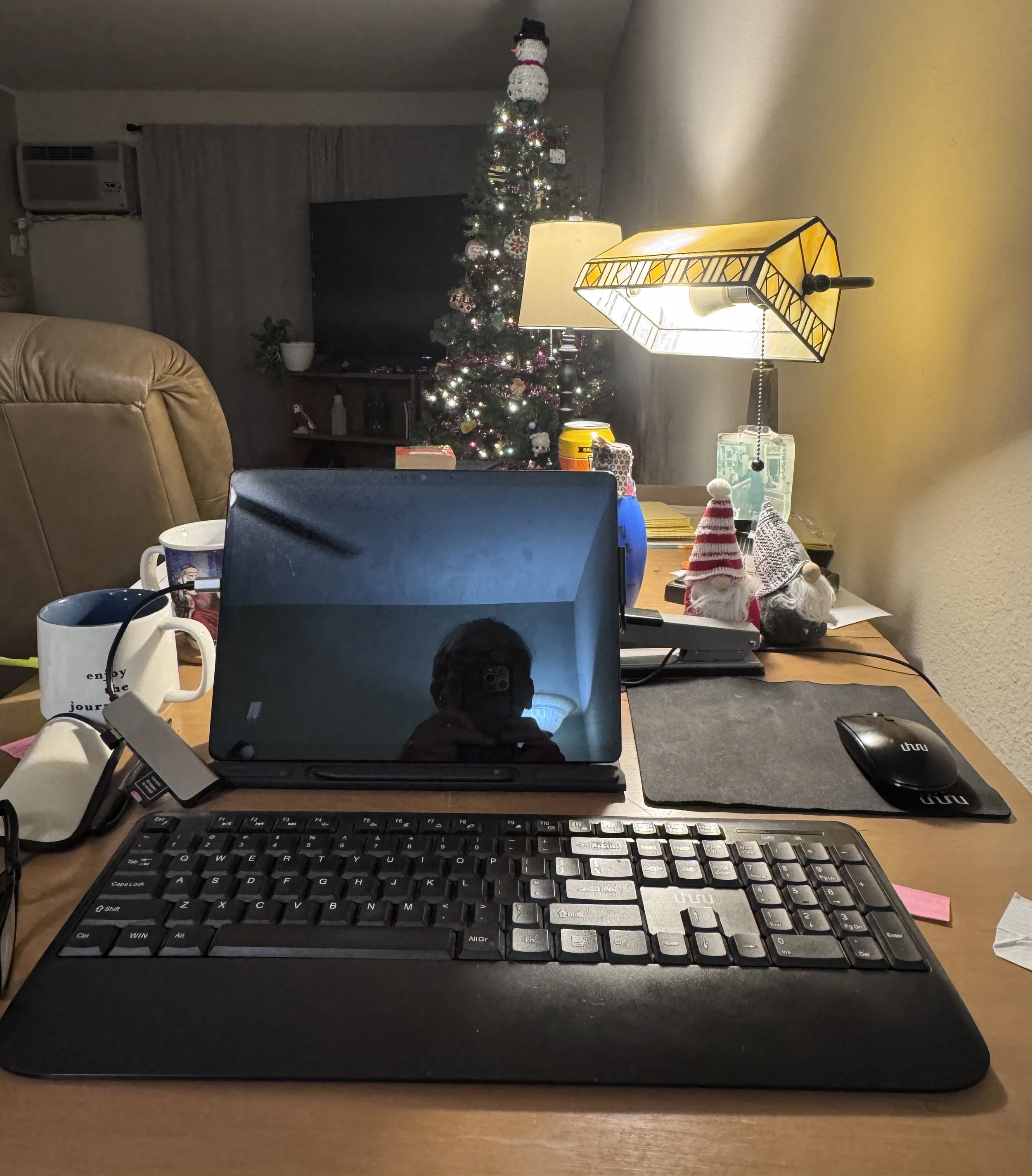
Just me.
Scott.
Diagnosed with ADHD and OCD in March of 2023 — at an age where most people assume you should already have it figured out, or at least be pretending convincingly.
Spoiler: I was very good at pretending.
And very bad at understanding why pretending exhausted me.
What I did have — long before I had a diagnosis — was a growing sense that my brain was always just slightly out of sync with the world. Not broken. Just… off by half a beat.
This post isn’t advice. It’s not instruction. It’s not therapy.
I’m not teaching, preaching, or counseling anyone.
This is simply my attempt to explain who I am, why I am this way, and how I’ve learned to manage my ADHD and OCD after a late-in-life diagnosis that answered questions I didn’t even know how to ask.
If you see yourself in it, stay.
If you don’t, that’s okay too. This is my story.
When Someone Explains More Than Two Steps, the Fog Rolls In
Before my diagnosis, I thought I was lazy in strange ways and obsessive in others. I could build massive projects from nothing — ideas stacking on ideas, worlds inside worlds — and then completely lose the thread if someone explained a process verbally that had more than two steps.
Two steps? Fine.
Three? Fog on the horizon.
Four or five? The fog rolls in like it’s got a lease on my brain-space and plans to redecorate.
Why Written Steps Save Me (And Verbal Instructions Don’t)
Here’s what that felt like growing up and into adulthood:
Someone would explain something — well-meaning, patient at first — and somewhere around step three, I could feel the original intent slipping away. Not because I wasn’t listening. Not because I didn’t care. But because my brain couldn’t hold the starting point while juggling the new information coming in.
And then came the fluster.

Because inevitably, a parent, a teacher, a coach, or a friend would get frustrated. Their tone would change. Their patience would thin. And I would internalize that as: You should be getting this by now.
But here’s the part no one noticed back then — and honestly, neither did I.
If those same exact steps were written down, and I could hold them in my hand while someone talked me through them?
Everything changed.
The fog stopped rolling in.
The intent stayed fresh.
My brain could breathe.
And then — fair warning — I would ask one thousand and one questions.
Not because I was confused.
But because now that I had the structure, I wanted to understand everything.
Those questions weren’t resistance. They were engagement. They were how I tuned myself into the process so I could go off and actually produce the work.
But from the outside?
It didn’t always look great.
Sit me down after the opening scene of a movie and say, “Just watch, it’ll make sense”?
Forget it.
I’ll start asking questions immediately.
Who is that?
Why did they say that?
Are they important?
Is this before or after the thing you mentioned earlier?
And yes — I’m aware — this is charming exactly once.
After that, siblings, kids, or friends are ready to throw me out of the recliner and possibly out of the house.
Which is particularly rude, considering it’s my house.
That tendency — the need to orient myself fully before I can relax into something — followed me everywhere. Work. Relationships. Creative projects. Conversations.
I wasn’t trying to derail things.
I was trying to stay present.
ADHD Isn’t About Attention — It’s About Regulation
For years, I thought this was a personal failing. A lack of focus. A discipline problem. Something I should’ve “grown out of.”
What I didn’t understand until my diagnosis was this:
ADHD isn’t really a disorder of attention.
It’s a disorder of regulation.
Regulating focus.
Regulating energy.
Regulating memory access.
Under stress, fatigue, multitasking, or overload, my brain doesn’t lose information — it loses access to it.
That distinction changed everything for me.

It explains why I can remember a random line from a movie I saw in 1987 but can’t recall where I saved a document from yesterday. It explains why multitasking feels productive and draining at the same time. It explains why context-switching feels like walking through fog with a flashlight that only works intermittently.
So without knowing it, I adapted.
I built systems.
How I Built Systems Before I Knew Why I Needed Them
At first, I didn’t call them systems. I just knew that if I didn’t externalize my thoughts, they disappeared. So I broke everything down. Action. Tasks. Background. References. Assets. Prompts. Project folders. Subfolders. Clearly labeled files.
This wasn’t neatness for neatness’ sake.
It was survival.
What surprised me after my diagnosis was realizing that this wasn’t just ADHD at work. This was where OCD quietly entered the room — clipboard in hand — insisting on order, completion, and correctness.
ADHD and OCD as Rival Co-Pilots (That Somehow Work)
ADHD wanted flexibility.
OCD wanted structure.
And somehow, those two learned to coexist.
ADHD generates ideas at warp speed. OCD catalogs them.
ADHD forgets. OCD documents.
ADHD starts projects impulsively. OCD refuses to let them die unfinished.
That combination can be exhausting — and I don’t romanticize it — but it’s also the reason I’ve been able to build creative worlds instead of burning out halfway through them.
Why I Stopped Fighting My Brain
For a long time, I thought my frustration when something wasn’t “just right” meant I was difficult. Now I understand it as my OCD reacting to inconsistency, gaps, or uncertainty. It wants predictability because predictability calms the noise.
And if I’m being honest with you — and this is one of those moments where I’d pause, look you in the eyes, and wait to see if you’re still with me —
I don’t fight my brain anymore.

I work with it.
I no longer try to hold everything in my head. I store clarity externally — in folders, outlines, notes, saved conversations, sometimes ridiculous reminders to myself.
I give each project its own “world.” Clear boundaries. Clean entry points. That way, when I step into one project, the others don’t shout for attention.
This isn’t discipline.
It’s compassion disguised as organization.
And when I feel overwhelmed now, I don’t default to self-blame. I ask a different question:
Have I overloaded my system?
Most of the time, the answer is yes.
The Truth About My Memory (And Why I Don’t Panic Anymore)
Another thing the diagnosis gave me — unexpectedly — was relief about my memory concerns. I don’t panic the way I used to. I understand now that fatigue, stress, and decision load dramatically affect recall for me.
When I’m rested and grounded, my memory is sharp.
When I’m stretched thin, it’s like someone shuffled the labels on the filing cabinets.
That understanding alone has softened the way I talk to myself.
And here’s something else I’ve come to accept — with a bit of self-effacing humor — my brain will always spot connections other people miss.
Sometimes it looks like rambling.
Sometimes it looks like ranting.
Sometimes it looks like me stopping mid-thought to catch my breath.
But more often than not, it’s my mind building tunnels between ideas that later turn into something meaningful.
The goal isn’t stopping that process.
It’s managing it without burning myself out.
I write things down. I park ideas instead of chasing them immediately. I trust that what matters will resurface.
That’s progress.
This Isn’t a Brand Story — It’s a Human One
This understanding — of ADHD, OCD, and how they interact — is still unfolding. I’m not finished. I’m not cured. I still overthink. I still get overwhelmed. I still have days where my patience leaves the room before I do.
But I also have language now.
Context.
And systems that steady me instead of spinning me out.
And that’s why this post exists.
Because before I tell you who I am, why I created Love, Lies & Scandals, and what this project has done for me, you need to understand the brain behind it.
This isn’t a brand origin story.
It’s a human one.
And if you’re still here — really here — then I’ll pause again, look you in the eyes, and say this quietly:
You’re not broken.
Neither am I.
We’re just learning how to live in a world that rarely slows down long enough to hand us the steps in writing.
Next week, I’ll start a four-part series that goes deeper — into identity, purpose, late diagnosis, and how this platform became both a creative outlet and a stabilizing force in my life.
This post is simply the prelude.
