
A Love Story I Did NOT Sign Up For
What ADHD + OCD Actually Look Like Together
When Two Brain Conditions Walk Into a Bar…
For the longest time, I chalked my quirks up to “just being me.” You know—spacing out mid-sentence, obsessively rereading texts before sending them, reorganizing my desk at 2 a.m., and occasionally spiraling into “what did I say in 2001 that still embarrasses me?” At this point, my desk has seen more organizational makeovers than my career goals.
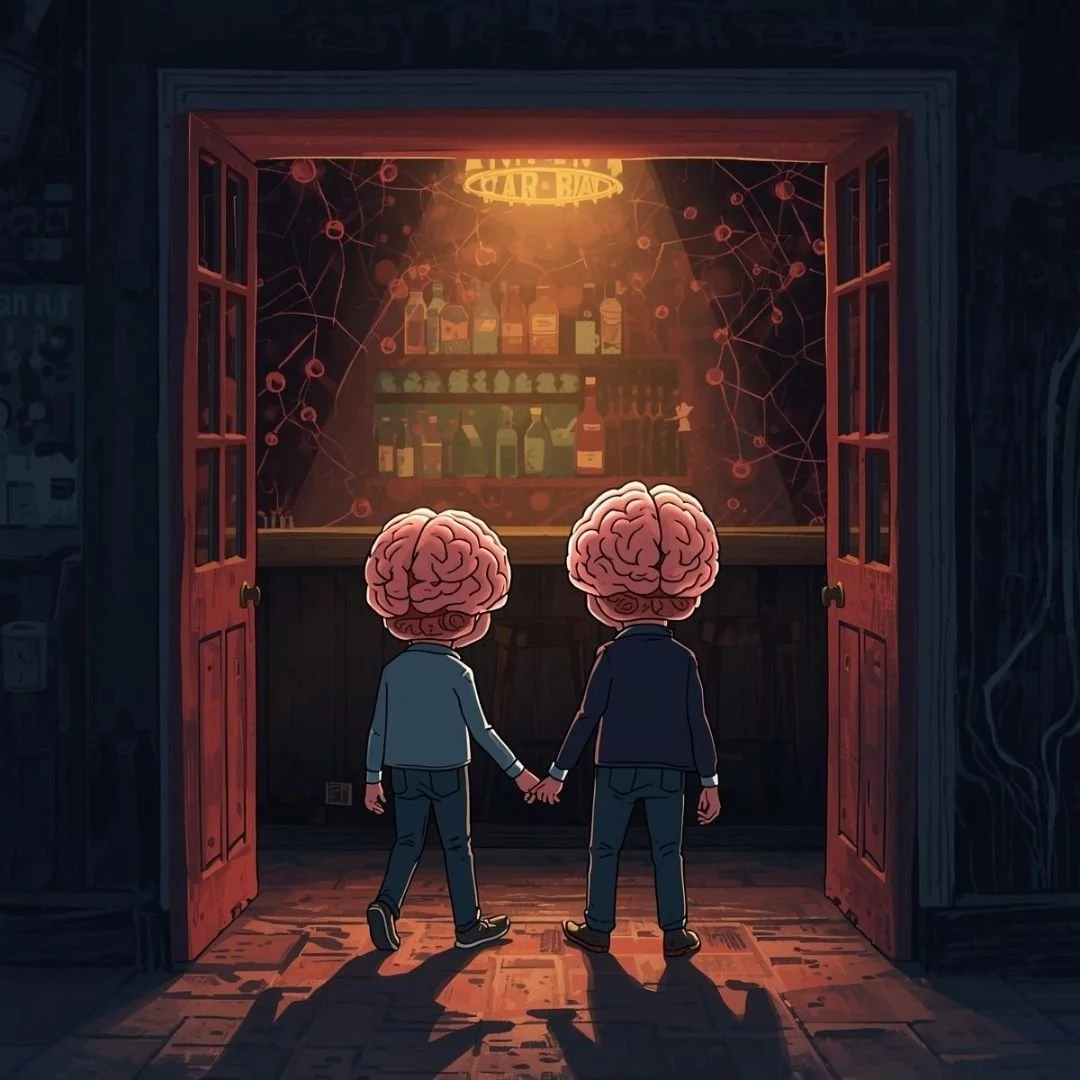
But things changed the day I sat across from my doctor, rambling about why my mind felt like a pinball machine. She listened, nodded, then said, “Have you ever considered that ADHD and OCD could both be playing a role?” Cue my internal monologue: Wait, you can have both? Like, at the same time? Is there a discount for combo deals? It felt like discovering the twist in a medical drama—except it was my brain, not a TV character.
Once I learned the overlap, everything clicked. Or short-circuited. Maybe both. But what do these diagnoses actually mean in practice? Let’s look at what science—and my daily life—have to say.
What the Experts Say (And What It Feels Like in Real Life)
Clinically speaking, ADHD and OCD both mess with executive function, attention regulation, and impulse control. According to the International OCD Foundation, “executive dysfunction” is a hallmark of both conditions, meaning daily tasks end up feeling like trying to juggle flaming torches while blindfolded. Healthline reports that about 30% of people with OCD also have ADHD symptoms, and vice versa—a pairing more common than most realize.
But here’s how I describe it:
ADHD me: “Let’s clean the entire house!”
OCD me: “But only if we research the scientifically correct order of cleaning.”
Depressed me: “Wake me when the cleaning’s over—or don’t, I’m good either way.”
The professional terms are “executive dysfunction,” “anxiety-compensatory behaviors,” and “attentional interference.” My term? A full-time job with no HR department and questionable pay.
Some days I swear my brain only keeps me around for entertainment. Part of me still wishes someone had told me all this sooner. Would it have changed much in my life, especially my dating life? Maybe, maybe not, or go lie down and pretend to be deep in thought.
When Opposites Don’t Attract — They Collide

ADHD craves novelty. OCD demands predictability. Depression votes for silence. Put all three together and you get a brain that wakes up every morning like, “We should begin seventeen tasks… but also worry about all of them… while simultaneously doing none of them.”
Relationships? Oh, well, try explaining to someone why you forgot their birthday but remember exactly how many times you locked the front door last Tuesday. I once spent a whole date trying not to count the restaurant’s pendant lights (OCD), then struggled to remember the woman’s name when she went to the restroom (ADHD). She never texted back. But honestly… I didn't remember that fact until three weeks later anyway.
It’s not just romance—work meetings, family gatherings, even friendships get tangled in this three-way tug-of-war. A “good brain day,” when routines align and focus behaves, feels magical. But those days are about as rare as my desk staying organized for an entire hour.
I still worry there are people who think I wasn’t trying hard enough. Hell, I still think that I was never trying hard enough at anything.
Why Burnout Hits Harder When You Have Both
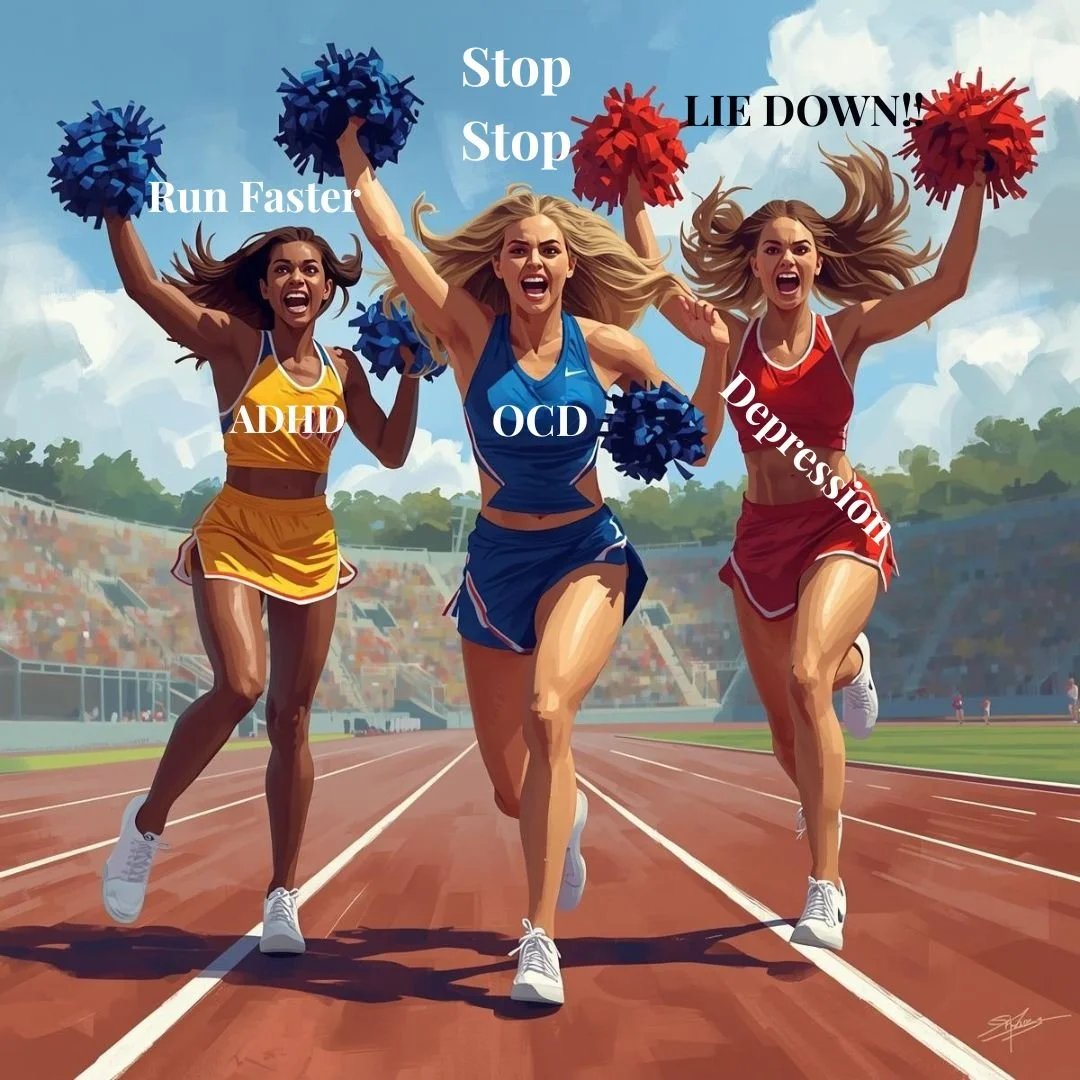
Here’s the cruel twist: ADHD pushes you forward (“Do all the things!”), OCD slams the brakes (“Do them perfectly”), and depression flattens the tires. It’s like running a marathon with two cheerleaders yelling opposite advice and a third one insisting you should lie down.
Burnout doesn’t just visit—it moves in, redecorates, and asks whether you’ll ever recharge your emotional battery. You power through because that’s what you’ve always done, not realizing you’re draining energy you never learned to replace.
Harvard Health warns that adults with untreated ADHD are at higher risk for depression, especially those diagnosed late. Add OCD to the mix, and you’ve got a cocktail of shame, anxiety, and fear of failure that’s not exactly refreshing. The International OCD Foundation notes that recognizing these cycles is essential for breaking them.
You’re not failing. You’re navigating two conditions that contradict each other for sport.
You’re allowed to be tired. You’re allowed to need help. And you’re allowed to rewrite the story.
The TCR Takeaway
If this is you? You’re not broken. Your brain just has an unnecessarily complicated user manual. And now—finally—you get to read it. Now, if only someone would rewrite the manual in emoji. And you are not alone, and hopefully, find humor to get you through the bad days.
• Consider therapy or medication management—professionals can tailor strategies for your unique symptom mix.
• Join support groups: CHADD, IOCDF, NAMI.
• Try apps for routines and mindfulness—sometimes a tiny reminder is all it takes.
• Read: OCD and ADHD: When Two Problems Collide (Harvard Health).
Living with ADHD and OCD is a love story I didn’t sign up for—but it’s proof that brains, like desks, are always a work in progress.
I’m still learning to love a brain that hasn’t always been kind to me. Apparently, it didn't understand the assignment "Be kind to yourself".
So be kind to yourself regardless of how healthy your brain is.
⭐ Sources & Recommended Reading Panel
Research & Articles
International OCD Foundation — Executive Dysfunction in OCD
Healthline — ADHD and OCD Symptom Overlap
Harvard Health — OCD and ADHD: When Two Problems Collide
Books
• Delivered from Distraction — Hallowell & Ratey
• The OCD Workbook — Bruce Hyman
• You Mean I’m Not Lazy, Stupid or Crazy?! — Kelly & Ramundo
Recommended Tools & Products
Daily planner for neurodiverse routines
Smart pill organizer
Habit tracker app
Meditation timer
Blue-light–free bedside lamp
Weighted blanket
Dry-erase weekly board
Aromatherapy diffuser
LL&S-branded journal (future merch alert)
