
The Yellow Brick Road Gets Shorter as We Age
Love, Regret, and Real Connection
Part 4 The Tin Man and the Maintenance Plan for a Heart
The Tin Man did not need a grand speech.
He needed oil.
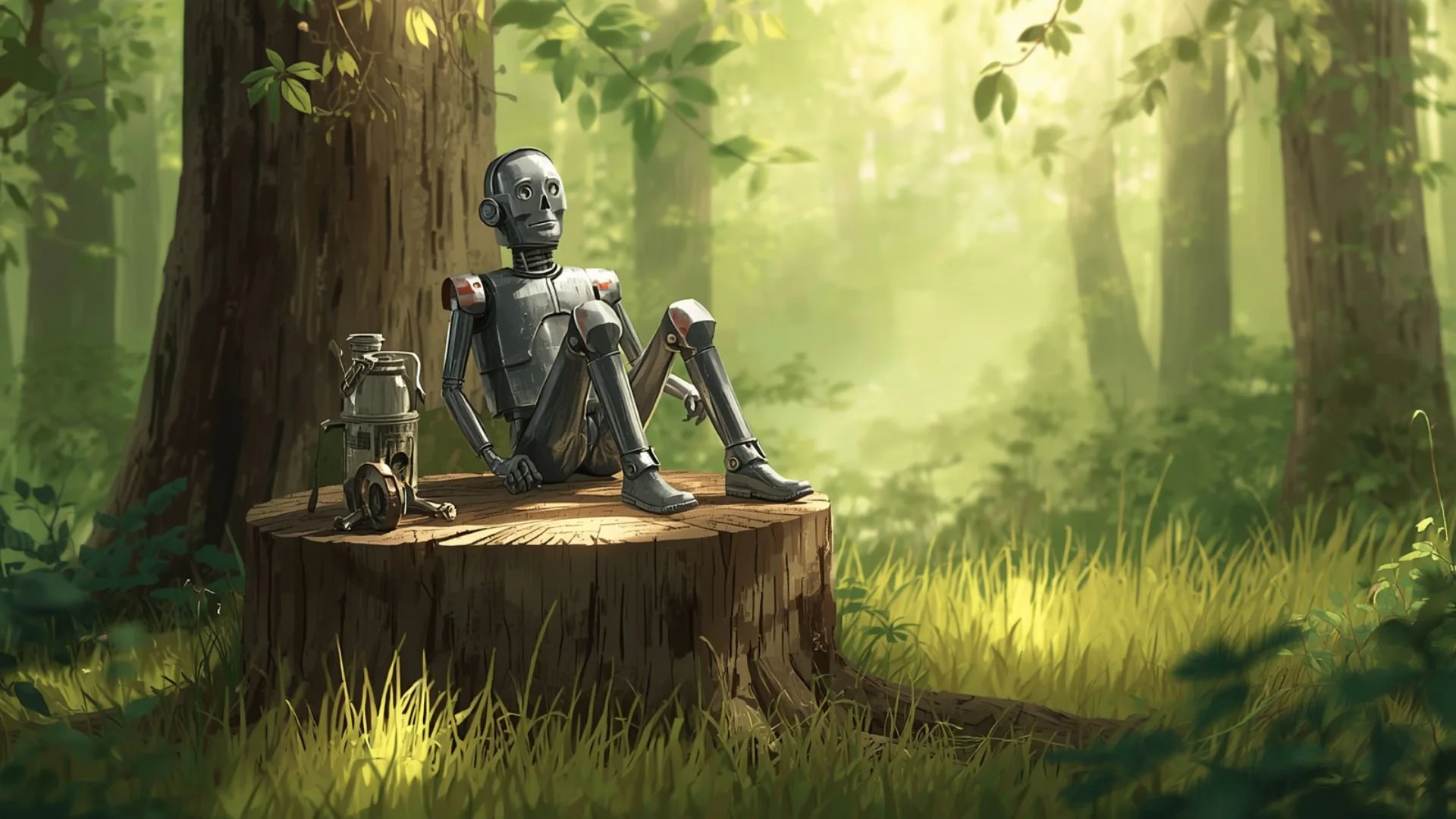
Honestly, that explains more relationships than most books in the self-help aisle.
We love to talk about the heart as if it were a dramatic organ. It breaks. It aches. It races. It wants what it wants, which is a phrase people use when they are about to make a decision their friends will discuss in the car afterward.
But in the Tin Man’s part of the story, the heart is not merely romantic. It is mechanical. It can rust. It can stiffen. It can stop moving not because it never loved, but because no one tended it.
That is where this road becomes less magical and more useful.
Finding love is one thing.
Keeping love alive is another.
The younger version of me did not fully understand this. I thought love, real love, should arrive with its own maintenance department. If two people were right for each other, surely the important things would take care of themselves.
This is adorable.
Wrong, but adorable.
It is the emotional equivalent of buying a house and assuming the roof will remain loyal because you once felt strongly about it.
Love leaks.
Not always dramatically. Sometimes it loses warmth by inches. A missed conversation here. A lazy assumption there. A joke that stings and never gets repaired. An apology that becomes a habit instead of a change. A hand not reached for. A story not listened to because we have heard the opening before.
Most relationships do not rust all at once.
They stiffen.
That is the Tin Man’s warning.
We tend to imagine romantic failure as thunder: betrayal, scandal, slammed doors, revelations in bad lighting. Sometimes that happens. Love, Lies and Scandals did not name itself, after all, because everyone sat calmly in cardigans and processed feelings responsibly.
But just as often, love fades through neglect.
Not cruelty.
Neglect.
The difference matters.
Cruelty is easier to identify. Neglect often arrives dressed as busyness, tiredness, familiarity, stress, routine, or the comforting lie that “they know how I feel.”
Maybe they do.

But knowing is not the same as feeling cherished.
One of the humbling truths of growing older is that big romantic gestures are not worthless, but they are overrated if the daily machinery is grinding itself to pieces.
Flowers are lovely.
So is listening when someone tells the same story because the story is not the point. The need to be heard is the point.
A weekend away can be wonderful.
So can noticing that the other person has been quieter lately and asking, without defensiveness, “Have I been missing you while standing right next to you?”
A dramatic declaration may make a good scene.
But taking out the trash without acting like you have stormed Normandy has saved more households than poetry.
The oil can is not glamorous.
That is why it matters.
Oil is the small apology offered before resentment hardens. It is the text that says, “I know today is hard.” It is the joke that makes the room lighter without making someone the punchline. It is asking the question and staying for the answer. It is touching the shoulder in the kitchen. It is remembering the appointment, the fear, the anniversary, the thing they said mattered even though it did not matter to you in the same way.
Oil is maintenance.
And maintenance is love after the music quiets.
This is not only for couples who have been together for decades. It is for anyone who wants something real at the end of the road. Dating requires maintenance too. So does trust. So does hope. So does the heart we carry into the next possibility.
We talk a lot about finding the right person.
We talk less about becoming the kind of person who does not let the right thing rust.
That second part is less marketable.
It is also where most of the work is.
I remember being angry once because I had spent time and money finding the perfect surprise gift, only to have it received with politeness instead of awe. Then she had the audacity to say, “You don’t have to buy me so many gifts. We could use the money for something else. And now the supper is cold.” I was aghast, which is a dignified word for a man realizing he has built his own trap and stepped into it wearing dress shoes.
In my haste to display my manly anger, I dropped the gift. I had forgotten I was holding it. It was glass. Nothing restores perspective quite like the sound of symbolism shattering on the floor. I went from righteous injury to immediate foolishness in under three seconds. She knelt beside me, helped gather the pieces, and said, “It was lovely while it lasted.” That made me laugh. She laughed with me. After dinner, we went for a walk. She took my hand, and we walked hand in hand. I could not remember the last time we had done that. The gift broke. The evening did not. That, I suspect, was the oil.
The Tin Man wanted a heart, but the irony is that he had one. What he lacked was confidence in it. Maybe that is familiar. Many of us have wondered whether life made us too hard, too guarded, too practical, too sarcastic, too bruised, too tired, too busy, or too old to love well.
The answer is usually no.
But the heart may need oil.
It may need grief cleared from its joints. It may need an apology we never gave. It may need forgiveness we have confused with approval. It may need rest. It may need laughter that does not cut. It may need to be used again carefully, like something valuable found in a garage after years under a tarp.

Hearts do not stay open by accident.
Neither do relationships.
This is where I, the Cynical Romantic has to admit something inconvenient: romance is not less romantic because it requires effort.
It is more romantic.
Anyone can be charming for three dinners. Many people can be fascinating until the check arrives. A surprising number can maintain mystery if they reveal absolutely nothing useful about themselves.
But effort over time?
That is where love gets interesting.
The person who keeps choosing tenderness when irritation would be easier. The one who repairs after conflict instead of collecting evidence. The one who says, “I was wrong,” without immediately calling witnesses for the defense. The one who stays curious after familiarity tempts them to assume they already know you.
That is oil.
The older we get, the more we understand that compatibility is not just shared taste.
It is shared maintenance.
Two people can love the same music, the same movies, the same food, the same lazy Sunday routine, and still destroy each other if neither knows how to repair. Meanwhile, two people can be very different and survive beautifully if both understand how to tend the connection when it stiffens.
The road gets shorter as we age, but that does not mean love must become smaller.
It may become more deliberate.
Less fireworks, more firewood.
Less “complete me,” more “help me keep this warm.”
That may not sound like a fairy tale, but fairy tales and Rom_Coms are notoriously vague about laundry, aging parents, blood pressure, disappointment, career stress, changed bodies, bad sleep, old grief, and what happens when two people who love each other are both tired on the same Tuesday.
The oil can lives on Tuesday.
That is where real love proves itself.
Not in the ballroom. Not in the rescue scene. Not when everyone is young, lit well, and emotionally available because the script requires it.
Real love is proven when the machinery gets stiff and someone reaches for the oil instead of a match.
We should not romanticize maintenance as endless self-sacrifice. That is another trap. If only one person is oiling the whole relationship, that is not devotion. That is unpaid emotional labor with candles.
The oil has to move both ways.
Both people must notice. Both must soften. Both must repair. Both must care enough to keep the heart from becoming a decorative object.

Because a heart can be present and still unused.
It can sit there, shining faintly, while pride, resentment, fear, routine, and laziness gather around it like rust.
The Tin Man reminds us that wanting a heart is not enough.
We have to keep it moving.
And maybe that is the quiet miracle of lasting love. Not that two people never stiffen, never fail, never disappoint, never become difficult, never need repair.
The miracle is that someone notices.
Someone reaches for the oil.
Someone says, “We are getting rusty.”
And if the love is still alive, if both people are still willing, if the road has not ended yet, the heart moves again.
Not perfectly.
But enough for the next step.
The Cynical Romantic’s Road Note
A heart is not proven by how loudly it beats at the beginning. It is proven by how carefully it is tended later.
Question for the Reader
What small act keeps your heart, or someone else’s, from rusting shut?
Next Tuesday
Next week, we meet the Lion and talk about courage: not the kind that roars, but the kind that finally moves on.
