
The Yellow Brick Road Gets Shorter as We Age
Love, Regret, and Real Connection
Part 1: The Tornado Was Birth, But Nobody Warned Us About Kansas
There is a certain unfairness in being born without a map.

There is a certain unfairness in being born without a map.
One minute you are nothing more than a tiny weather event wrapped in a blanket, and the next everybody around you is teaching you what love is supposed to look like. Nobody calls it teaching, of course. They call it family. They call it home. They call it “that’s just how things are.”
And because you are young, and because you have no reason to suspect the adults are improvising, you believe them.
That is where the Yellow Brick Road begins.
Not with romance. Not with a kiss. Not with a soft-focus montage where two attractive people reach for the same apple in a grocery store and somehow know they are destined to share a mortgage and a disappointing sectional sofa.
The road begins much earlier.
It begins in Kansas.
Kansas is not just a place. Kansas is the emotional weather system we are born into. It is the house, the voices, the silence, the arguments, the rituals, the rules spoken out loud, and the rules everyone obeys without ever naming them. It is how people in our first world handled affection. It is how they handled anger. It is what they called loyalty. It is what they avoided. It is what they endured.
Before we ever fall in love, we learn what love costs.
Some of us learn that love is steady. Some learn it is conditional. Some learn it is loud. Some learn it disappears when anyone gets uncomfortable. Some learn love means staying no matter what. Some learn love means leaving before anyone can leave us first.
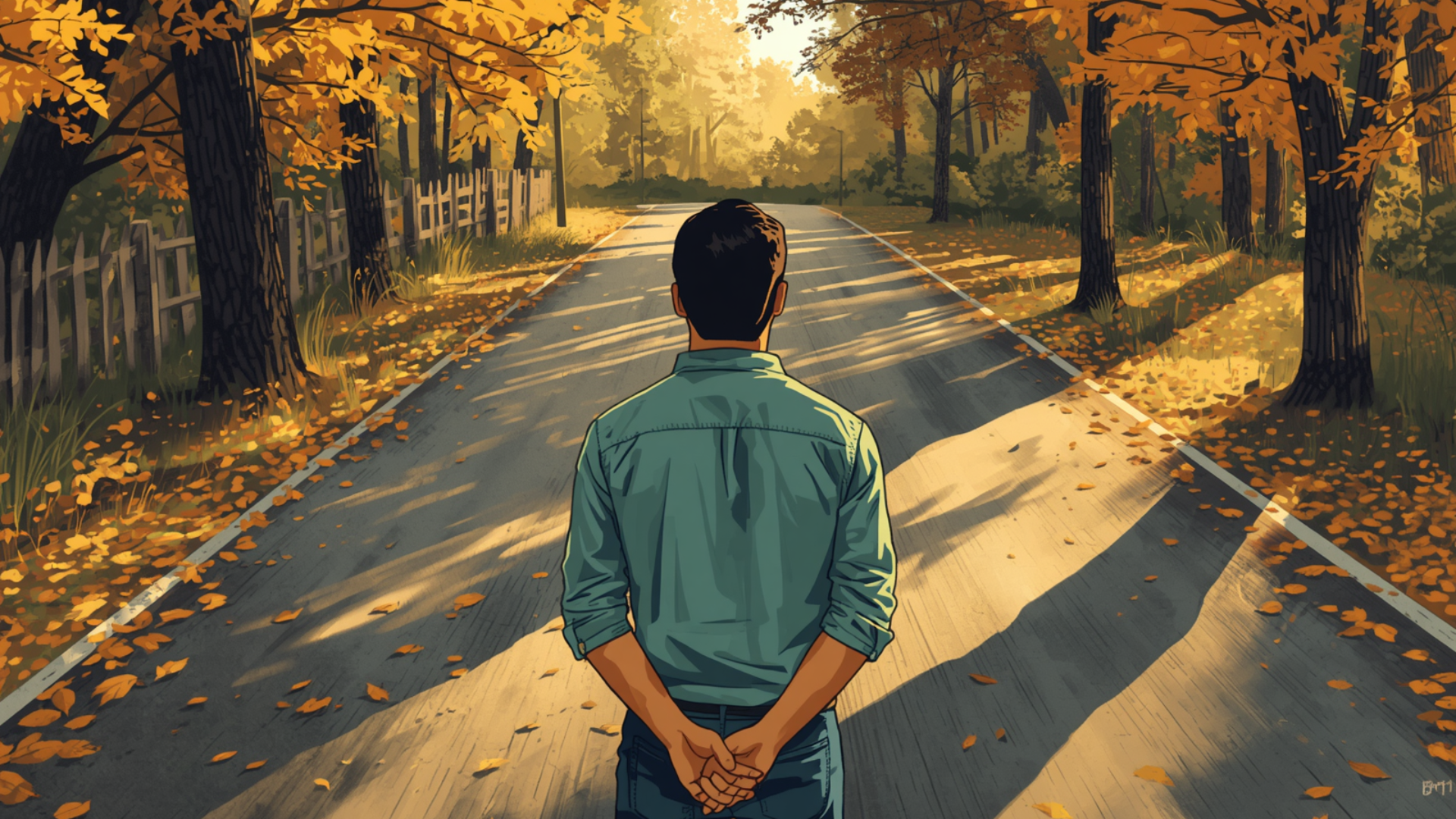
Most of us do not know what we learned until we are standing in front of someone years later, behaving like a reasonable adult while some little storm inside us is still looking for the basement.
Mine was not the kind of Kansas people usually blame in therapy.
My parents were affectionate with each other. They argued, but they compromised. They had roles, responsibilities, and a marriage that looked less like a fairy tale and more like a functioning small business that happened to include love. They spent time together. They genuinely seemed to like each other. Their friends were mostly couples who approached marriage and family the same way. Looking back, there was a consistency in it that I probably took for granted.
They also repeated one lesson often enough that all six of their children could recite it.
"Make sure you like the person you fall in love with."
At the time, that seemed obvious. Of course you would.
What I heard was the love part.
What I somehow missed was the like part.
The chase? I understood that. The excitement, the chemistry, the feeling that the universe had briefly stopped minding its own business and decided to get involved in my personal life? I was an eager student.
The quieter work of actually liking someone day after day, year after year, even after the fireworks packed up and went home? That lesson never quite settled in.
As it turns out, chemistry can start a relationship.
Liking the person is usually what keeps it from becoming a really expensive life lesson.
This is the first annoying truth about relationships: we bring our weather with us.
I used to believe I was self-made. This is one of those charming lies men tell themselves around the age when they buy decent shoes and start using words like “boundaries” incorrectly.
I thought I had invented my personality from scratch. My humor? Mine. My caution? Mine. My ability to turn emotional vulnerability into a joke and then act surprised when intimacy took the next exit? Also mine, apparently.
Then life began handing me receipts.
A certain kind of silence made me uneasy. A certain kind of affection made me suspicious. A certain kind of conflict made me want to either fix everything immediately or disappear into the emotional equivalent of a storm cellar with snacks.
That was not sophistication. That was Kansas.
Maybe your Kansas was a house where nobody said “I love you,” but everybody showed up when the car broke down. Maybe it was a house where affection was abundant but stability was optional. Maybe it was a house where one person did all the feeling and another person did all the leaving. Maybe it was a house where love was real, but nobody had the language for it, so it came out as work, duty, criticism, or a plate of food pushed across the table.
We make a mistake when we judge these early places too simply.
As Dorothy and Toto discovered, Kansas is rarely the villain we turn it into later. Most of our first homes were complicated places. They taught us things worth keeping and things we'd spend years trying to unlearn. Sometimes both lessons arrive before dinner. A parent could make you feel safe and misunderstood in the same conversation. A family could teach loyalty and avoidance as if they belonged in the same instruction manual. That's what makes looking back so difficult. The evidence refuses to cooperate with a simple verdict.
It may have given us tenderness and fear, loyalty and avoidance, hope and a deep suspicion of hope’s marketing department.
This is why growing older complicates the love story.
When we are young, we want someone to rescue us from Kansas. We want love to arrive like Technicolor after a lifetime of gray. We want the tornado to mean transformation. We want a new world, new music, new shoes, and some highly specific confirmation that we are finally special.
But later, if we are paying attention, we realize love does not rescue us from Kansas.
Love reveals how much of Kansas we packed.
That is a rude discovery. Necessary, but rude.
It is much easier to say, “I just keep attracting emotionally unavailable people,” than to ask why emotional unavailability feels familiar enough to be mistaken for chemistry. It is easier to say, “I hate drama,” than to ask why calm feels boring until we learn to trust it. It is easier to say, “I am unlucky in love,” than to wonder whether we keep auditioning people for roles they never agreed to play.
The Yellow Brick Road gets shorter as we age because time stops feeling theoretical.
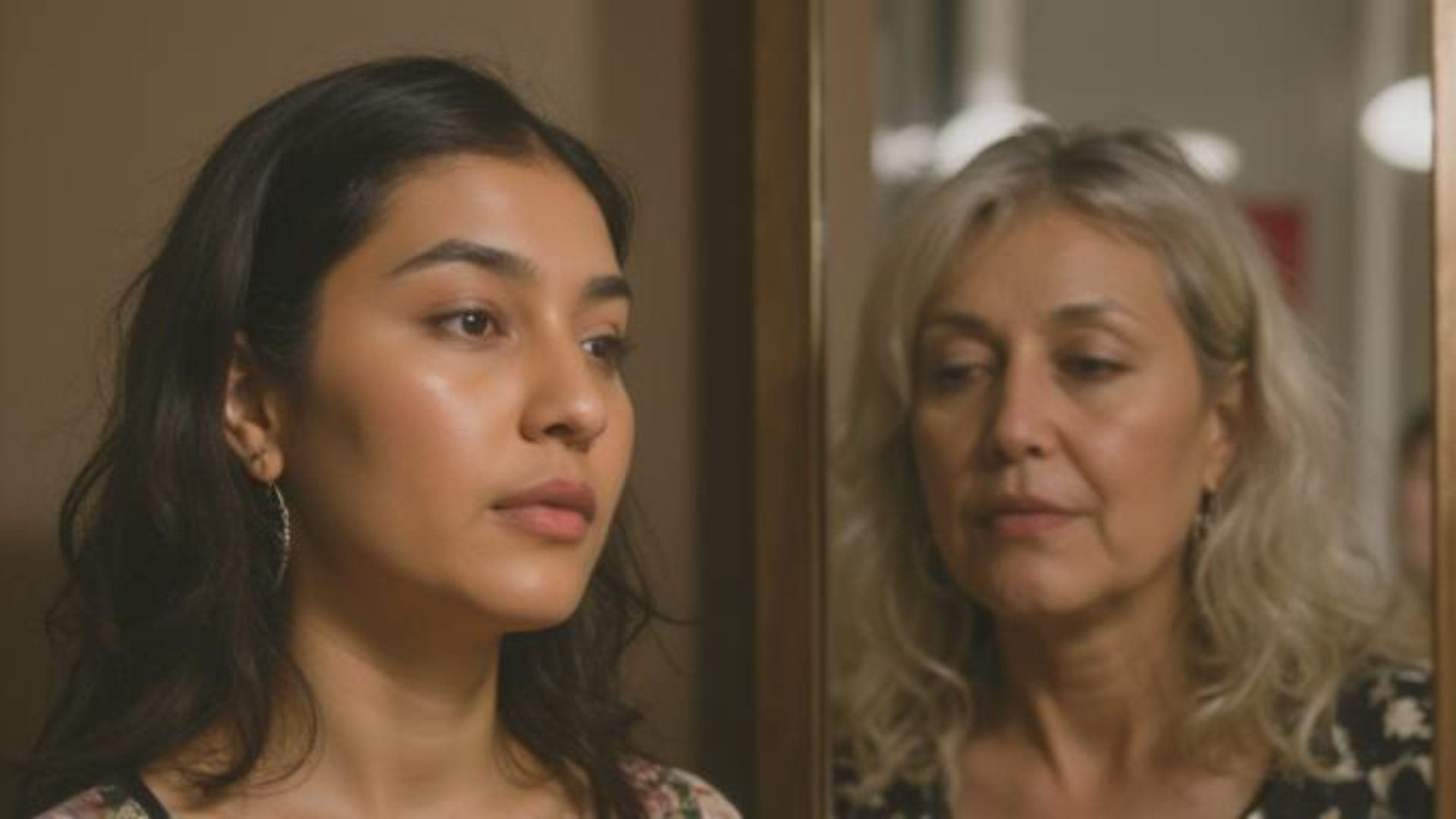
At twenty-two, you can waste three years on a person who treats your heart like a subscription service they forgot to cancel. At forty-two, three years has weight. At sixty-two, three years has a sound. It clicks when you set it down.
That does not mean love becomes impossible.
It means love becomes less casual.
The older we get, the more we understand that every relationship is not merely a beginning. It is also an inheritance meeting another inheritance. Two people show up carrying childhoods, exes, habits, fears, unfinished arguments, and one or two ridiculous beliefs they defend as if they were carved on stone tablets.
Then we call it dating.
No wonder everyone needs a drink.
But here is the generous part: if Kansas shaped us, it does not have to sentence us.
We are not responsible for the tornado. We are responsible for what we do after we land.
That is where the road becomes interesting.
At some point, each of us has to look at the emotional weather we inherited and ask what we want to keep. Maybe loyalty. Maybe humor. Maybe resilience. Maybe the ability to love through hard seasons. Maybe the old-fashioned decency of showing up.
Then we have to ask what we are dragging forward.
The silence. The suspicion. The performance. The belief that wanting too much makes us weak. The fear that if someone sees the real version of us, they will start checking exits.
That is not easy work.
It is much easier to blame the tornado.
I know. I have done some of my finest emotional legal work in that courtroom. I have presented exhibits. I have cross-examined memories. I have objected loudly to personal accountability on the grounds that I was “doing my best,” which is often true and still not always enough.
Freshman year of high school, I decided the most mature way to end my first relationship was to write a breakup letter and hand it to my sister, who would then deliver it to my girlfriend while she sat with the band in the bleachers before a football game. This, somehow, was my version of facing conflict head-on.
My father had taught me that lesson: do not hide from hard conversations. Meet them directly. Unfortunately, I interpreted “directly” to mean “through a handwritten note, a sibling courier, and a marching band audience.”
She read it in the bandstand. Then she cried in the bandstand. Then her friends read it in the bandstand. Meanwhile, I stood less than twenty feet away, waiting to run onto the football field and learning, in real time, that cowardice sometimes wears the costume of thoughtfulness.
That story belongs more fully in Munchkinland, where youth has confidence, bad timing, and absolutely no business making decisions near musical instruments. But it belongs here too, because Kansas had already given me the lessons. Like the person. Face the conflict. Be kind. Be honest. Think before acting.
I had heard all of them. I had simply not assembled them into anything resembling wisdom. My tornado was starting to pick up speed, and I was already mistaking motion for maturity.
The Cynical Romantic is not cynical because he has stopped believing in love.
I am cynical because I know love has a paperwork problem.
It requires us to examine what we signed before we knew how to read.

That is the first step on this road. Before the Scarecrow, before the Tin Man, before the Lion, before the castle, before the wizard and his theatrical smoke machine, we have to understand where we began.
We have to look back at Kansas without either worshiping it or burning it down.
We have to say: this is where I learned. This is where I misunderstood. This is where I was loved badly, or well, or in the only way they knew how. This is where I learned to protect myself. This is where I first confused protection with personality. This is where I learned some lessons correctly and completely missed others.
My family taught me that lasting love requires liking the person. My father taught me to face conflict directly. My family taught me to be kind, thoughtful, and honest. I did eventually learn those things, although “eventually” is doing heroic work in that sentence. For a while, I confused honesty with immediacy, thoughtfulness with good intentions, and conflict resolution with whatever made the moment end fastest. If ghosting had existed then, I might have mistaken that for emotional efficiency too. Instead, I developed the equally sophisticated strategy of dating less. Fewer dates, fewer tears. Not growth exactly, but at least a reduction in paperwork.
And then, if we are brave enough, we take one step forward. Not because the road is guaranteed to lead us to the love we imagined, and not because the next stop will make us suddenly wise. The road ahead still has Munchkinland, Scarecrows, Tin Men, Lions, witches, poppy fields, and at least one wizard with a suspicious résumé. But standing still in Kansas is also a choice.
And eventually, even the most sentimental among us must admit the obvious:
The tornado already happened.
The question is where we walk now.
The Cynical Romantic’s Road Note
We do not choose the tornado. But sooner or later, we become responsible for the emotional furniture it dropped in our yard.
Question for the Reader
What did your first home teach you about love before you were old enough to question it?
Next Tuesday
Next week, we enter Munchkinland, otherwise known as youth: that magical place where confidence is high, wisdom is low, chemistry has a publicist, and one teenage boy mistakes a breakup letter for courage.
