
Who Invented “Soulmates”
Part 2 of the 7 Part Series on Soulmates
Who Invented “Soulmates” (And Why We Fell for It)
By the time someone looks you in the eyes and whispers, “You’re my soulmate,” the word feels ancient—like it’s been carved into the universe since the beginning of time.

It hasn’t.
The idea is old. The word is a baby compared to the myths we talked about in Part 1. And understanding where the language came from—and how it got turned into a global marketing department for “forever”—is the next step in seeing soulmates clearly… without completely killing the romance.
Because I’m not here to talk you out of big love. I’m here to help you recognize the difference between a deep connection and a phrase we picked up from poets, movie studios, and dating apps with a vested interest in your hope.
This is just my life experience and AI-assisted research. I am not a professional anything.
When “soulmate” entered the chat
Once upon a time, we had all the soulmate energy and none of the vocabulary.
We had Plato’s split humans, spiritual “other halves,” divine couples, destiny threads… but no English word that wrapped it all into one neat label.
Enter the 19th century: the age of romantic poets, big feelings, and very long sentences.
That’s when variations of “soul-mate” start appearing in English—often hyphenated at first, often in letters and literature, and often dripping with the kind of intensity that would make modern therapists slightly nervous.
It wasn’t yet a cliché. It was more like a serious compliment: not just “I love you,” but “you match me at the deepest level.”
The core idea was simple:
• Not just a spouse or lover
• Not just a friend
• But a person whose soul feels aligned with yours
Beautiful. Dangerous. Irresistible.
Exactly the kind of thing humans love to overuse and under-understand.
Over time, the hyphen melts away—soul mate becomes soulmate—and the word starts doing what good words always do: travel.
From page to people: how literature romanticized “the one”
Once the word existed, writers went to town.
Literature in the 18th and 19th centuries was already busy turning love into a spiritual event. Novels were full of intense, tortured bonds where two characters were portrayed as being made of the same emotional atoms.
Even when they didn’t use the exact word “soulmate,” they were selling the same premise:
• We are not just compatible.
• We are the same, on some mystical internal level.

Readers ate it up.
After all, who wants to be “reasonably well matched” when you can be “two souls made of the same storm”?
The danger here is subtle.
If the highest romantic ideal is “our souls are identical,” then any difference, conflict, or mismatch can feel like failure.
Real relationships are two different people trying to build a life together.
Soulmate talk makes it sound like you’ve finally found someone who will think, feel, and react exactly the way you do.
Spoiler: they won’t.
Even if they also like dogs and hate small talk.
How the word went mainstream
Fast forward to the 20th century and early 21st. The word “soulmate” leaves the literary salons and starts showing up everywhere:
• Self-help books promising to help you “attract your soulmate”
• Advice columns talking about “finding your soulmate”
• Talk shows and magazines using it as shorthand for “ultimate partner”
• Everyday conversations: “I’m still waiting for my soulmate” becomes a normal sentence, not a dramatic monologue
What used to be a rarefied poetic term gets flattened into a daily fantasy: somewhere out there is one person who will finally make it all make sense.
Does that sound like pressure?
Because it is.
Now it’s not enough to date, love, try, grow, fail, and learn. You’re supposed to be on a scavenger hunt for the singular person who was “made for you.”
If you don’t find them, what—did you fail at life?
At love?
This is how a word becomes a measuring stick no one can actually live up to.
Hollywood grabs the steering wheel

Then movies show up like, “Oh, this is cute—let us exaggerate it.”
Film and TV take the soulmate idea and turn it into a plot engine:
• Two people meet in a clumsy, adorable way (or across time, or via magic)
• The connection is instant and overwhelming
• There are misunderstandings, obstacles, and at least one dramatic rain scene
• In the end, destiny wins, they choose each other, and we fade to credits
We call these romances, but they’re really origin stories for modern soulmate belief.
They visually train us to look for:
• That first electric eye contact
• The sense of inevitability
• The “we’ve known each other forever” feeling on date one
What they don’t show:
• How they navigate sex drives that don’t always match
• The fights about money and in-laws
• The slow build of trust over years
• The work of staying when it’s boring—or hard—but still loving
So we come out of the theater, or off the couch, with a quiet script installed:
“My soulmate will feel like that.”
If it doesn’t, we assume we haven’t found them yet.
Or worse, we assume the person we already chose can’t be “it,” because life together doesn’t constantly feel like a montage.
Magazines, quizzes, and “Are they really your soulmate?”
Then came the era of glossy magazines, online quizzes, and listicles:
“10 Signs You’ve Found Your Soulmate”
“Is Your Partner Really ‘The One’?”
Nothing spreads a word like a quiz that promises certainty.
We love checklists because they soothe anxiety: if I can just tick enough boxes, I’ll know.
The problem is that many of those signs are vague enough to apply to half the people you’ve dated:
• “You feel comfortable together”
• “You’ve been through challenges”
• “You can be yourself”
This is not a sacred cosmic bond.
This is what we should be aiming for in any decent relationship.
But call it a soulmate checklist, and suddenly people start thinking:
“If my relationship doesn’t hit all 10… maybe they’re not The One. Maybe my real soulmate is still out there.”
Which, coincidentally, keeps you anxious, searching, and consuming more content.

Funny how that works.
The self-help and spiritual boom
As self-help and New Age spirituality exploded, “soulmate” became a favorite keyword.
There were books and workshops on:
• Manifesting your soulmate
• Healing so your soulmate can “find you”
• Attracting your twin flame, soul family, or karmic partner
Some of it can be helpful—encouraging people to heal old wounds and raise their standards.
But the shadow side is this:
If your soulmate is framed as a prize you attract by becoming more healed, spiritual, or “high vibe,” then every heartbreak can feel like a personal failure.
Did they leave?
Maybe you weren’t healed enough.
Maybe you messed up your vibration.
It’s the same old fear—“why wasn’t I enough?”—wrapped in new packaging.
Dating apps and algorithmic destiny
Today, dating apps have quietly taken the soulmate myth and turned it into UX.
• Perfect match percentages
• Curated “Most Compatible” picks
• “You two are destined to meet”-style notifications
We know we’re looking at an algorithm, but the language is flattering. It makes swiping feel less like gambling and more like guided fate.
You’re not desperately sorting through strangers—you’re letting the universe bring your soulmate through your phone, which might be the least romantic sentence ever spoken.
When that match fizzles, though, it stings more than “we just weren’t into each other.”
It can feel like “I blew my chance with someone I was meant to be with.”
That sting keeps you coming back for more swipes, more chances, more almost-soulmates.
Again: very good for business.
Less good for your nervous system.
So why did we fall for all of this?
Because the soulmate story does a few things brilliantly:
• It gives meaning to loneliness: you’re not just alone—you’re pre-partnered in theory.
• It gives meaning to intensity: if it’s explosive, chaotic, or overwhelming, it must be special.
• It gives meaning to pain: if it hurts, it’s because you lost “The One,” not because you ignored 17 red flags.
Most of us would rather believe in a meaningful heartbreak than a meaningless one.
Calling someone your soulmate makes the whole roller coaster feel important—even if the ride almost killed you.
Where this leaves us (for now)
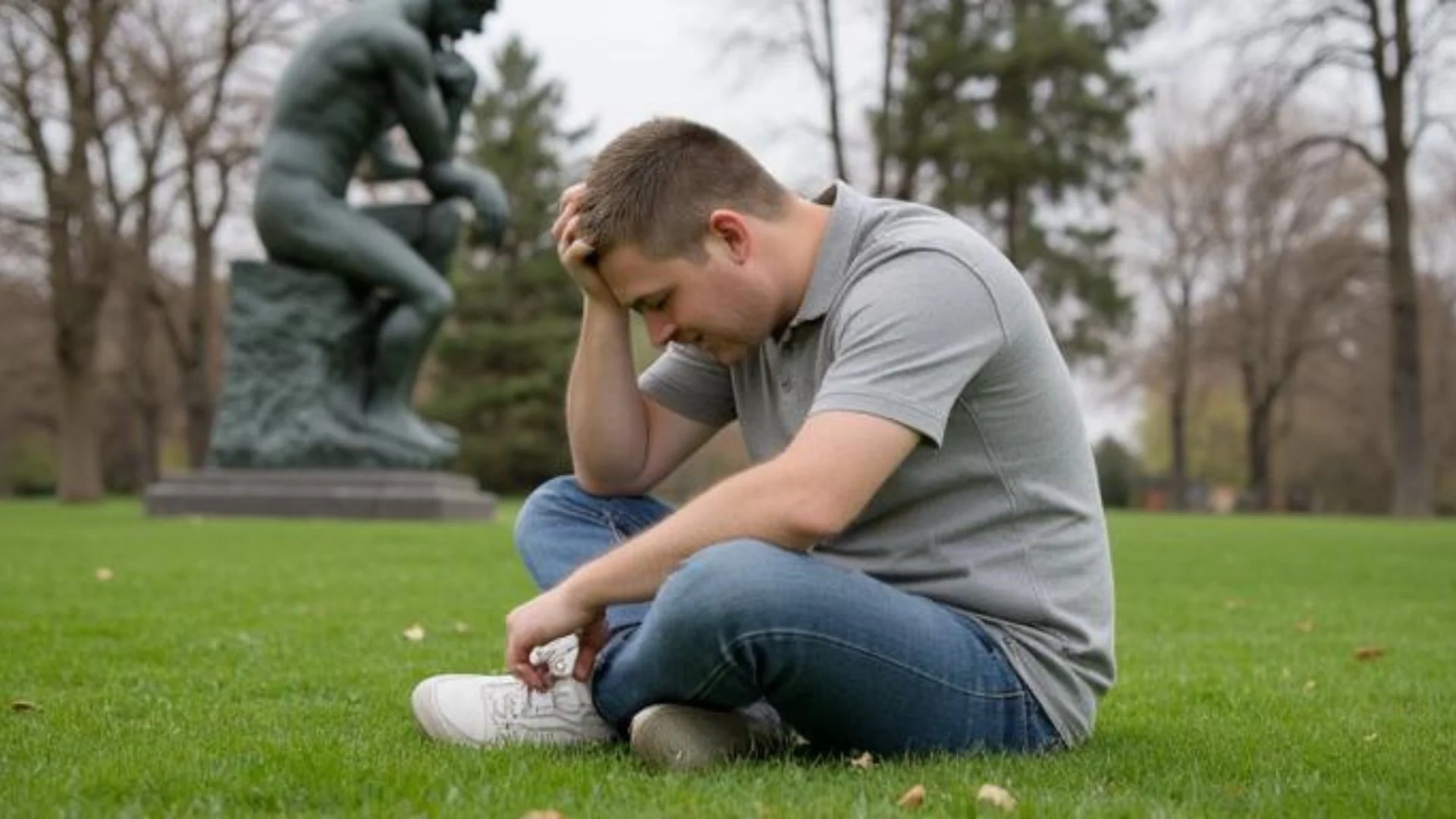
I’m not suggesting you ban the word “soulmate” from your vocabulary.
Honestly, I’d have to go back and edit half my life.
But it’s worth knowing this:
• The word is recent.
• The myth is ancient.
• The way we use it now has been shaped by poets, priests, producers, marketers, and platforms that all benefit from you believing in something bigger than “we get along and do the work.”
You can still call someone your soulmate.
Just know that when you do, you’re not describing a cosmic fact—you’re applying a very loaded label.
And that label comes with expectations, scripts, and pressure they never actually agreed to.
In the next part, we’re going deeper into what’s happening under the hood when we do this—how your beliefs, attachment style, and brain quirks all team up to either help you find a healthy “my person”…
—or drag you right back into soulmate-shaped chaos.
