
Naming Your Emotions
How Naming Your Emotions Can Turn Anxiety Into Connection
Meet Dr. Megan Anna Neff: The Person Who Put Words to the Thing I Was Feeling on That Date
Before we get into the emotional acrobatics—and trust me, there will be emotional acrobatics—let’s acknowledge the person whose work sent me down this particular rabbit hole.
Dr. Megan Anna Neff is a clinical psychologist, researcher, and author specializing in neurodivergence, emotional health, and identity. She’s also the founder of Neurodivergent Insights, where she somehow manages to blend neuroscience, lived experience, and compassion without making you feel like you’re being graded afterward.
Which matters. Especially if you’ve ever been on a date where you felt something—but didn’t know what it was until three days later in the shower.
Dr. Neff’s work helps neurodivergent adults understand their emotional landscapes instead of just apologizing for them. Her book, Self-Care for Autistic People doesn’t talk at you. It sits beside you and say, “Yeah… this part is tricky.”
You can explore her work at neurodivergentinsights.com, or follow her on Instagram (@neurodivergent_insights), where she regularly posts insights that feel less like advice and more like someone quietly naming the thing you couldn’t quite explain on your last date.
And that’s where this really begins.
The Emotional Circus (And Why Naming the Clowns Helps)
Emotions aren’t villains. They’re messengers.
Sometimes polite.
Sometimes loud.
Sometimes dressed like clowns with no exit strategy.
In a so-called “typical” brain, the process is fairly linear:
You feel something → recognize it → respond.
For those of us with ADHD or OCD?
You feel something, your brain panics, and suddenly you’re playing emotional charades:
Is this attraction? Anxiety? Rejection? Hunger? A childhood wound I forgot about until now?
Meanwhile, the emotion pulls up a chair, eats your snacks, and refuses to leave until properly acknowledged.
Dr. Neff puts it beautifully:
“Naming the emotion doesn’t magically fix it—it just takes away its superpower.”
That one line alone could’ve saved me at least three awkward first dates.
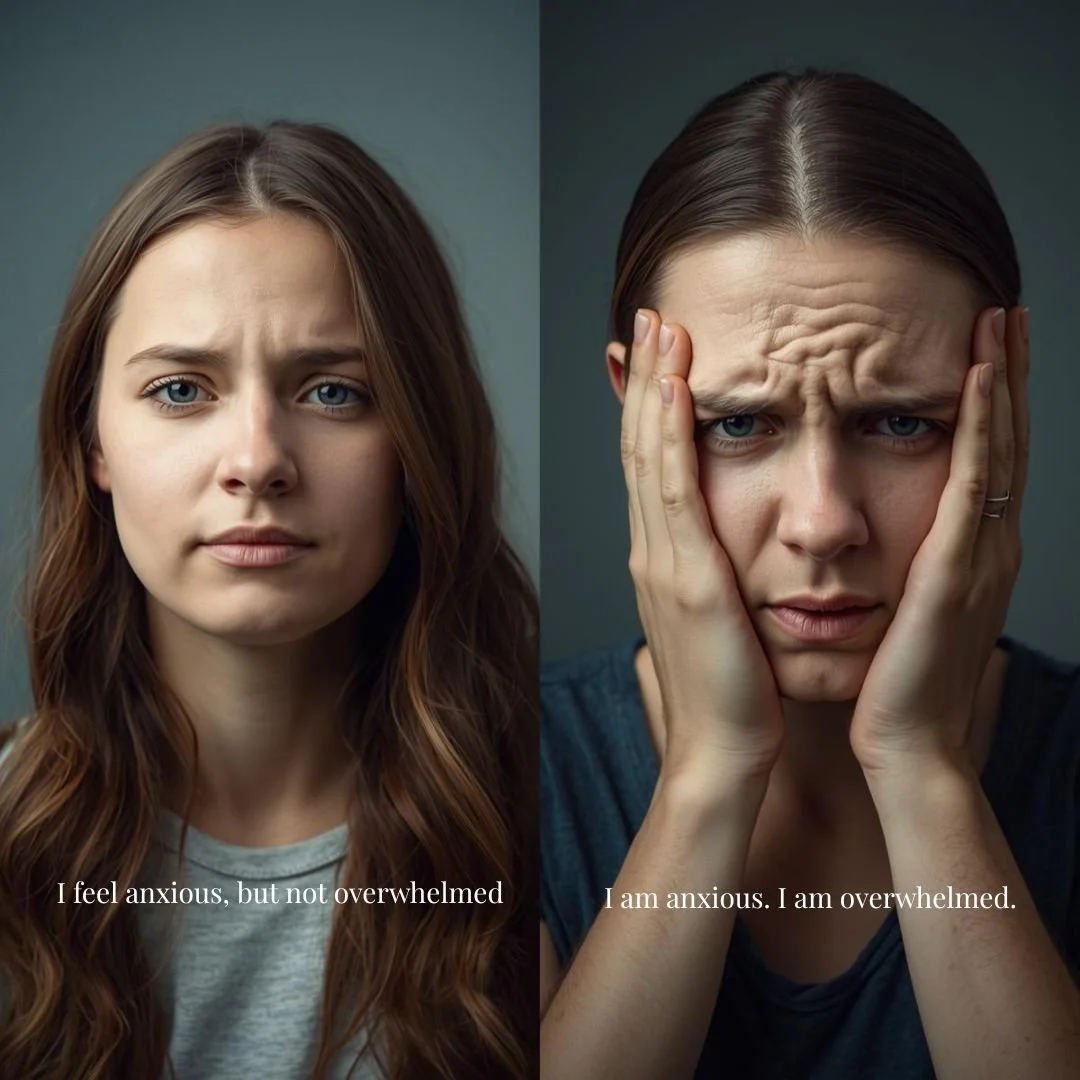
Because there’s a difference between being anxious and feeling anxious.
One owns you.
The other just… visits.
Neuroscience backs this up. Dr. Dan Siegel’s famous phrase “Name it to tame it” explains that labeling emotions activates the prefrontal cortex—the part of your brain that gently suggests, “Maybe don’t spiral just yet.”
Which is especially helpful when you’re sitting across from someone attractive, wondering why your chest feels tight and your personality has temporarily gone on vacation.
ADHD, OCD, and the Emotional Overreaction Olympics
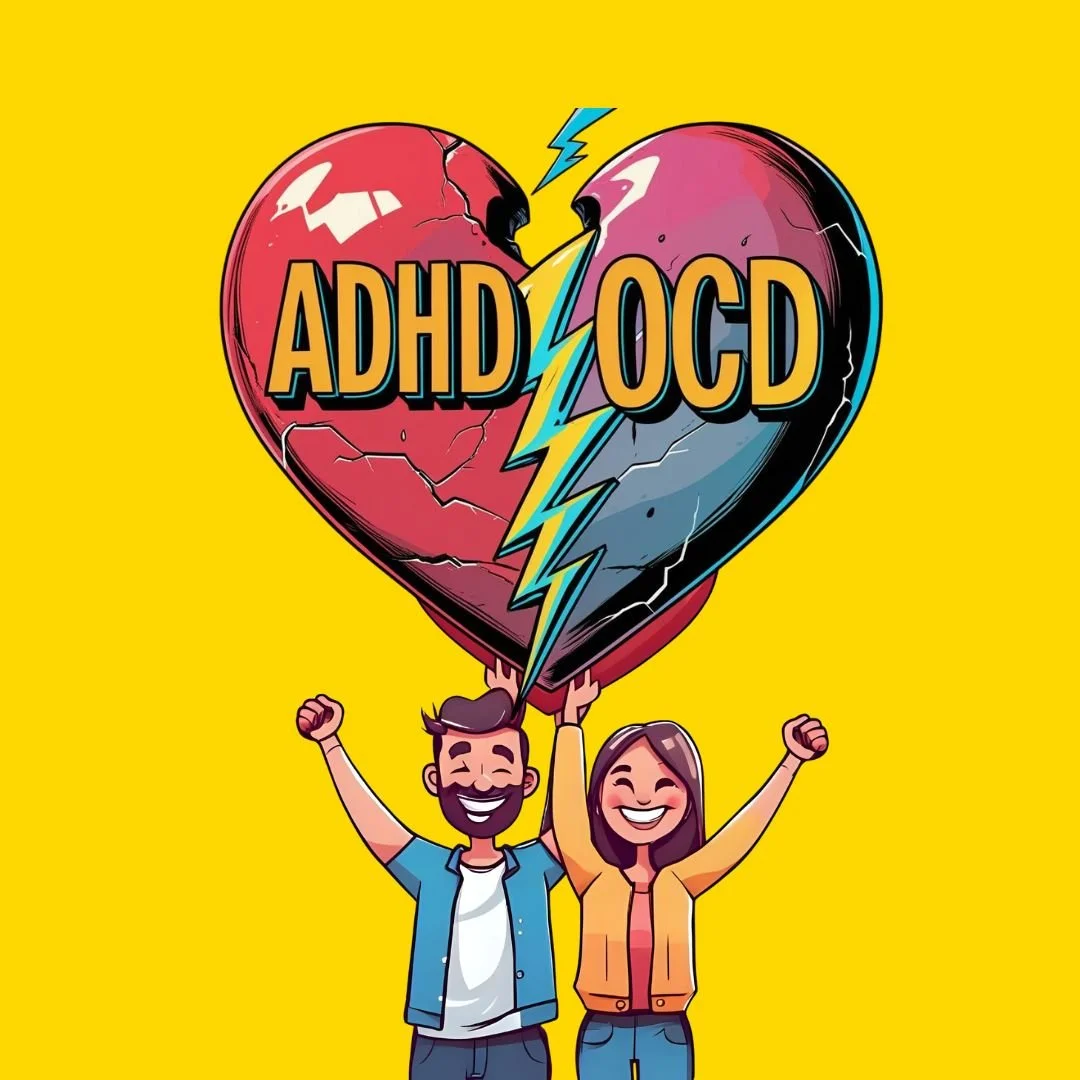
If ADHD had an Olympic sport, it would be emotional intensity.
Gold medal.
World record.
No warm-up.
Science calls it emotional dysregulation.
I call it feeling everything everywhere all at once—often triggered by something deeply unromantic, like a delayed text or a neutral facial expression that my brain immediately translates as “they’re losing interest and already drafting the goodbye speech.”
Here’s how it usually goes:
Someone sighs.
Your brain notices.
Your amygdala panics.
Dopamine says, “Let’s hyperfocus on this for the next six hours.”
Research confirms this isn’t imagination. People with ADHD experience emotions more intensely and take longer to recover (Shaw et al., 2014). Dr. Thomas E. Brown emphasizes that emotional impulsivity isn’t a side effect of ADHD—it’s a core feature.
OCD adds another layer. The rituals aren’t just about thoughts—they’re about emotions that won’t stop knocking. Fear. Guilt. Doubt. All lining up politely… and then refusing to leave.
Put that on a date, and suddenly you’re not flirting—you’re negotiating with your nervous system.
Why Emotional Awareness Matters (Especially on a First Date)
Dr. Neff’s core insight lands hard here:
Naming an emotion creates space between you and it.
And space matters.
Without it, emotions drive the car while logic is tied up in the trunk texting, “Are we okay?”
Dr. Marc Brackett of Yale’s Center for Emotional Intelligence notes that labeling emotions increases self-control and reduces anxiety. Translation: you’re less likely to misinterpret nerves as disinterest—or attraction as impending doom.
On a date, this can be the difference between:
“I’m awkward, they’re bored, this is doomed”
and“I’m nervous because I actually like them.”
That’s not semantics.
That’s survival.
Naming emotions helps you:
Decode what’s actually happening (“This is overwhelm, not rejection.”)
Spot patterns (“I spiral when I feel uncertain.”)
Separate wiring from reality (“This is my OCD catastrophizing again.”)
Communicate without combusting (“Hey, I’m overloaded—not upset.”)
That’s not therapy-speak.
That’s emotional CPR.
Practical Ways to Name Your Feelings Before They Sabotage the Date
Here’s how to keep your emotional circus from burning down the tent mid-entrée:
Pause before the spiral. Notice your cues—tight chest, clenched jaw, inner monologue auditioning for Dateline.
Say it correctly. “I feel anxious.” Not “I am anxious.” You’re a person having a feeling, not a feeling renting out your body.
Scale it. Is this a 3/10 wobble or a 9/10 meltdown? Perspective changes everything.
Externalize it. Write it. Voice-note it. Doodle it. ADHD brains forget emotions the moment they pass.
Check the aftermath. Did naming it help? Annoyingly… yes.
It’s not about suppressing emotions.
It’s about giving them a name tag so they stop crashing the party.
How Naming Emotions Changes the Second Date (And Beyond)
Here’s the quiet part no one tells you.
Naming emotions doesn’t just help you.
It changes how people experience you.
When you say, “I’m not distant—I’m overwhelmed,” you invite connection instead of confusion. When you name nervousness instead of masking it, something softens. Trust grows. The guessing game stops.
Over time, this builds resilience. You recognize triggers. You anticipate patterns. You stop shaming yourself for feeling “too much.”
And for neurodivergent adults, that matters deeply.

Because feeling intensely isn’t a flaw.
It’s wiring.
And with awareness, it can become empathy, insight—even intimacy.
Do Better. Be Better.
Do Better:
Practice naming your emotions this week—especially the awkward ones. Use Dr. Neff’s emotion wheel. Write them down. Say them gently.
Be Better:
Stop treating emotions as evidence that you’re broken. They’re proof you’re alive, paying attention, and wired differently in fascinating ways.
Because maybe emotional balance isn’t about calming your mind.
Maybe it’s about learning your feelings’ names…
and letting them sit beside you—
instead of running the whole date.
References & Gratitude
Grateful thanks to Dr. Megan Anna Neff and her article Why Naming Emotions Can Make a Big Difference at Neurodivergent Insights for inspiring this reflection.
Sources:
Shaw, P. et al. (2014). Emotion dysregulation in ADHD. European Child & Adolescent Psychiatry.
ADD.org (2023). Emotional Dysregulation: Managing Intense Emotions in ADHD.
CAPMH Journal (2022). Emotional dysregulation in ADHD and other neurodevelopmental conditions.
Siegel, D. (2012). The Developing Mind.
Brown, T. E. (2013). Attention Deficit Disorder: The Unfocused Mind in Children and Adults.
Brackett, M. (2019). Permission to Feel.
