
ADHD Relations: Building Teamwork
Communication
Part Two of a four part series The Psychology of Love
The Hard Part Isn’t Understanding — It’s Explaining
Understanding your own brain is a powerful moment.
Explaining it to someone else…
That’s where things get tricky.
ADHD and OCD are invisible conditions.
There’s no cast, no scar, no obvious sign that something neurological is happening.
From the outside, a person with ADHD may look distracted or careless.
Someone with OCD might appear overly cautious or particular.
Which is why conversations about these conditions often start with a misunderstanding.
“You just need to focus.”
“You worry too much.”
“Everyone gets distracted.”
Statements like these aren’t usually cruel. They’re simply uninformed. And learning how to communicate what’s really happening inside your mind can transform relationships.
The Difference Between Excuses and Explanations
One of the biggest fears people have when discussing ADHD or OCD is sounding like they’re making excuses. No one wants to hide behind a diagnosis. But here’s the important distinction:
An excuse removes responsibility.
An explanation creates understanding.
When you say:
“I have ADHD, so I can’t ever be on time.”
That sounds like an excuse.
But when you say:
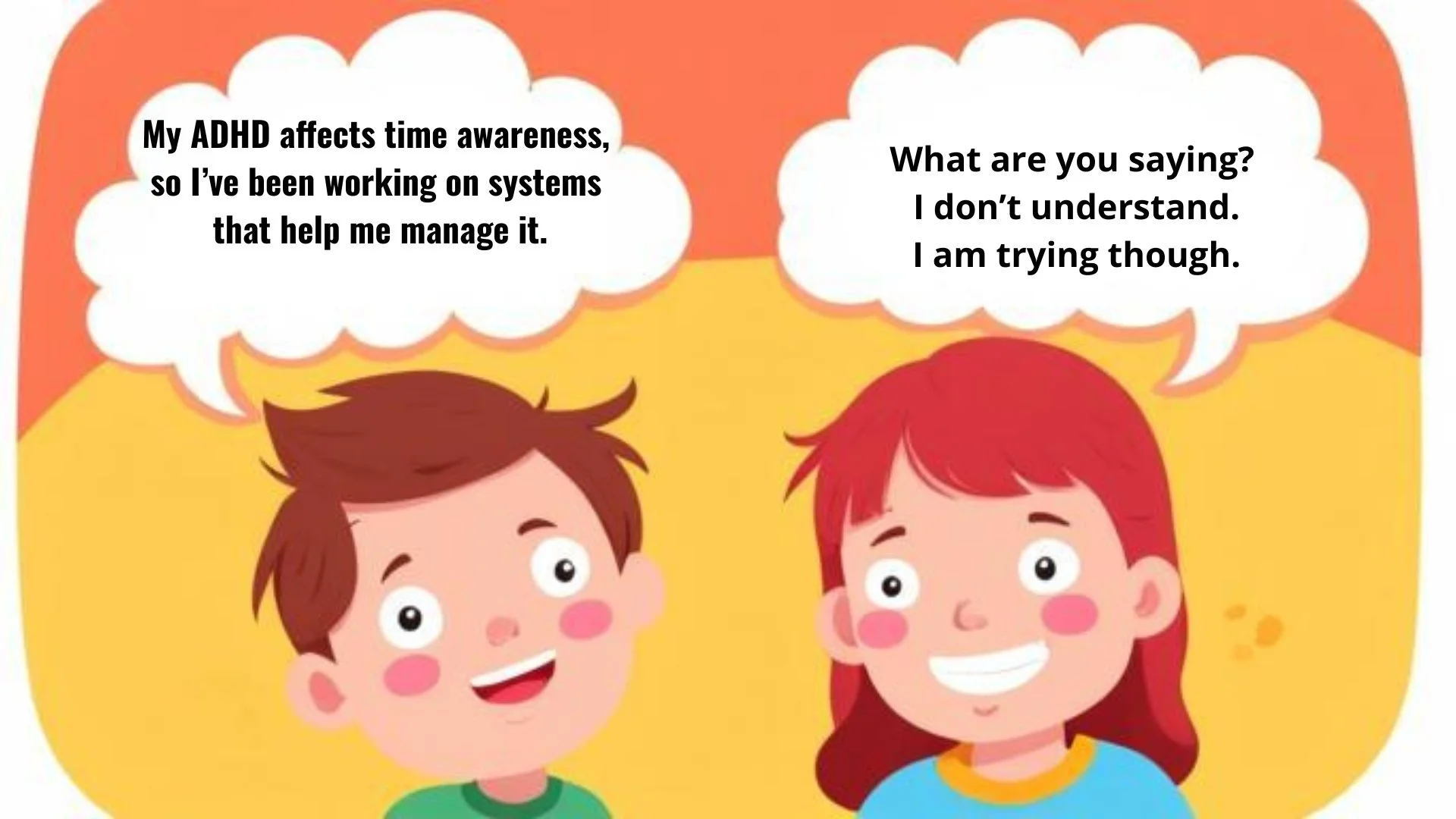
“My ADHD affects time awareness, so I’ve been working on systems that help me manage it.”
That’s an explanation. Communication works best when it includes two elements: honesty and effort. You’re not saying the challenge doesn’t exist. You’re saying you’re actively learning how to manage it.
Explaining ADHD to Someone Who Doesn’t Have It
People without ADHD often struggle to imagine what it feels like. One helpful way to explain it is through metaphor.
Many describe the ADHD brain as having a powerful engine but unreliable brakes.
Ideas come quickly.
Creativity runs high.
Energy can surge unexpectedly.
But controlling when to start, stop, or shift attention can feel difficult.
Another way to explain it is through the concept of executive function.
These are the mental skills that help us plan, prioritize, and regulate emotions. For people with ADHD, those systems don’t always operate smoothly.
So the challenge isn’t intelligence.
It’s regulation.
And once people understand that difference, conversations tend to shift from judgment to curiosity.
OCD Without the “Neat Freak” Stereotype

OCD carries its own set of misunderstandings. Many people assume OCD simply means someone likes things clean or organized. But the reality is far more complex.
OCD is driven by anxiety and intrusive thoughts.
Imagine your brain raising a fire alarm — repeatedly — even when there’s no fire. You know the building is safe. But the alarm keeps ringing.
Compulsions are attempts to quiet that alarm.
They’re not about preference. They’re about relief.
Explaining OCD in those terms often helps people understand that what looks like a “quirk” from the outside is actually an effort to manage intense internal anxiety.
The People Who Will Understand
One surprising discovery many people make after opening up about ADHD or OCD is that the reactions vary widely.
Some people immediately show empathy.
Others remain skeptical.

And a few will quietly say something unexpected.
“Wait… I think I might struggle with that too.”
Conversations about mental health have a way of revealing hidden common ground.
Not everyone will understand your experience. But the people who matter most usually make an effort to try. And those conversations can strengthen relationships in ways you may not expect.
A Small Step Toward Connection
Learning how to communicate about ADHD or OCD is not about convincing everyone. It’s about giving the people closest to you a clearer picture of how your mind works. And sometimes that clarity leads to something incredibly valuable.
Patience.
From others. And eventually… from yourself.
Which brings us to the next step in this journey.
ADHD Relationships: Building Teamwork Part Three of Four-Acceptance
