
ADHD Didn’t Start with Tik tok
Part 2: ADHD History, Symptoms, and Relationship Impact
Some days it feels like ADHD was invented the moment social media needed more content.
But the truth is, people have been writing about brains like ours for over a century—long before fidget cubes and productivity hacks were a thing.
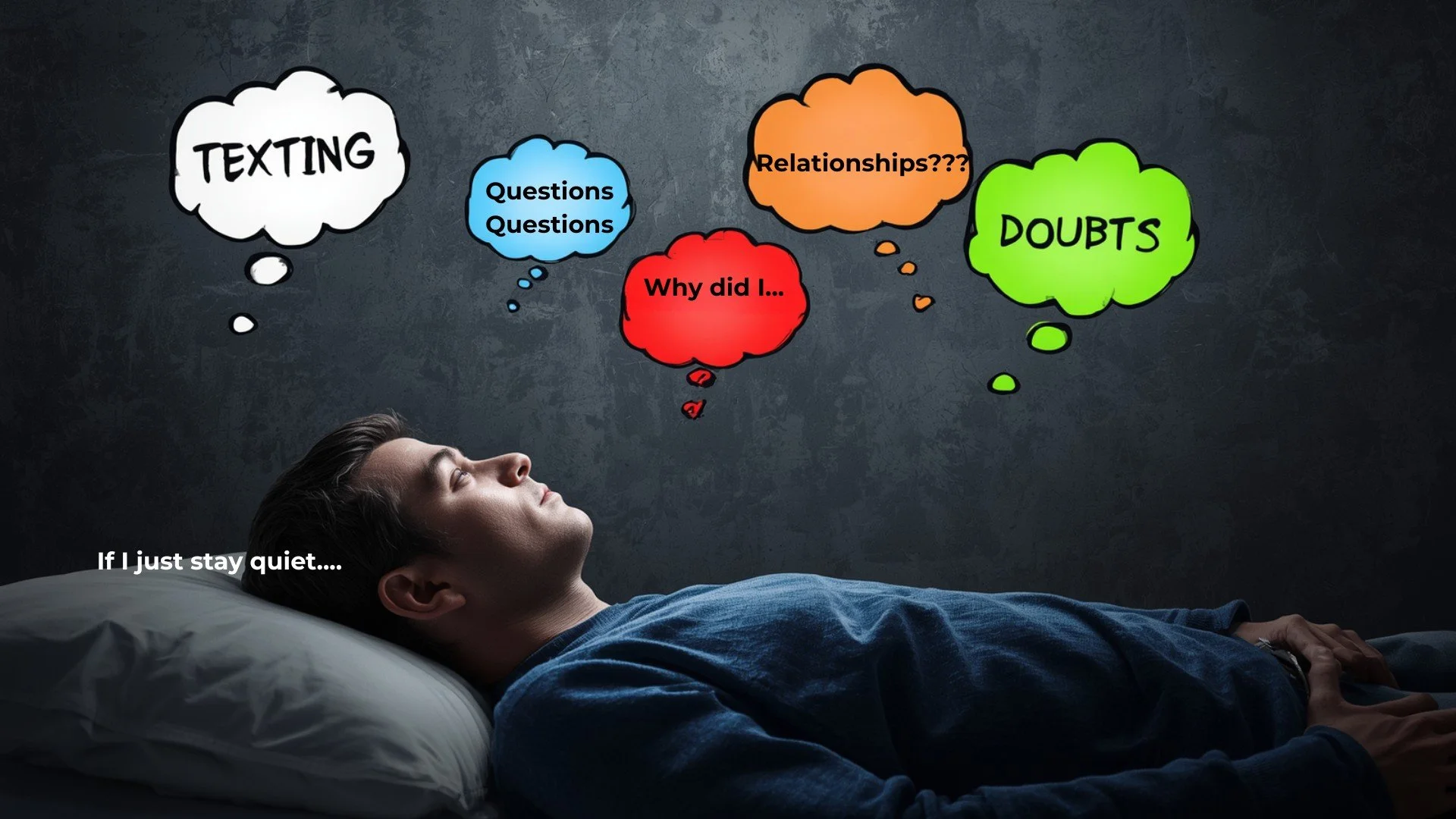
In Part 1, we talked about self‑awareness, late diagnosis, and the joy/terror of telling the truth to professionals and the people you love.
In Part 2, we’re zooming out: Where did ADHD come from (medically speaking), what does it actually look like in adults, and how does it tangle itself into relationships?
A Short (I Promise) History of ADHD
ADHD has been described in medical literature for decades, but it wore different names and outfits along the way.
Over time, clinicians shifted from seeing it as just “hyperactive kids” to recognizing it as a neurodevelopmental condition that often continues into adulthood.
Diagnostic manuals evolved too, with criteria expanding to include adult presentations—things like chronic disorganization, restlessness, and impulsive decision‑making, not just bouncing off classroom walls.
And more recent work has highlighted how many women, gender‑diverse folks, and quieter daydreamy kids were simply missed, only to be diagnosed later when work, relationships, and life started to strain.
In high school, I was often read as arrogant, conceited, or just plain weird—which was a rough review, considering I was mostly confused and overstimulated. I knew people were reacting to me, and it bothered me, but I had no idea how to explain what was happening inside. My brain couldn’t keep up with the room. People would crack a joke and everyone else got it instantly while I was still trying to mentally load the page. The more overwhelmed I felt, the more I disappeared into my own head, like my body had shown up and the rest of me was buffering nearby.
In social settings, that disconnect got louder. At parties or dances, I’d have no idea what to say while my friends were relaxed, laughing, and trading stories like they’d all gotten the script and I’d missed rehearsal. I felt awkward, self-conscious, and separate from everyone else, even when I wanted badly to connect. Then there was the impulsivity, which could go sideways fast—and, if I’m being honest, it did nothing to improve my chances with girls I wanted to get to know. For a long time, I thought I was an extrovert who was somehow doing extroversion wrong. It wasn’t until I was diagnosed that I realized I also had a strong introverted side. I wasn’t broken or fake; I was trying to navigate a brain that was loud on the inside and hard to explain from the outside.
Adult ADHD: It’s Not Just “Can’t Focus”
When people think ADHD, they tend to picture “short attention span.”
In adults, it’s more like “attention that gets kidnapped by whatever is loudest, shiniest, or most emotionally charged.”
Clinicians group symptoms into three main domains: inattention, hyperactivity/restlessness, and impulsivity.
In practice, that looks like:
Losing track of conversations halfway through, no matter how much you care.
Forgetting appointments, important dates, or texts you answered “in your head” and never actually sent.
Feeling restless or keyed‑up inside, even if you’re sitting still.
Interrupting, oversharing, or making quick decisions that you later regret.

Studies of adults with ADHD show that these patterns affect work, home, and relationships—everything from managing bills to following through on promises to handling conflict without going from 0 to 100 emotionally.
Emotional ADHD: Big Feelings, Fast Reactions
One of the least talked‑about parts of ADHD is emotional dysregulation.
It’s not just “being dramatic”—it’s a nervous system that reacts quickly and intensely, then sometimes struggles to come back down.
Research links adult ADHD with difficulties managing frustration, anger, rejection, and shame, and these emotional swings can be a major source of relationship stress. Partners may see this as overreacting, stonewalling, or “making everything a big deal,” when underneath it’s more like your internal volume knob is stuck on “max.”
When I was younger, I could be loud—or suddenly dead quiet, usually at exactly the wrong time for both. At sports games, I’d cheer a good play by our team even if the other side had just scored, which made it look like I was rooting for the enemy. That got me plenty of “what is wrong with you?” looks, and I replayed them for weeks like my brain ran a 24/7 embarrassment channel. The worst part was that my reaction made sense to me. I was responding to what I thought was good. But once people decided I’d cheered for the wrong thing, explaining it only made me sound guiltier. So I stopped explaining, got self-conscious, and trusted myself less in crowds, at parties, or anywhere other people seemed to know the script and I was still trying to find my page.
ADHD’s Frequent Flyers: Anxiety, Depression, and OCD
ADHD often doesn’t travel alone.
Many adults with ADHD also experience anxiety, depression, or obsessive‑compulsive symptoms.
This overlap can make diagnosis messy:
Are you anxious because you’re always late and behind, or are you late and behind because anxiety is eating your brain?
Are you obsessing and compulsing because of OCD, or because your ADHD brain is trying to control chaos with rituals?
Clinicians emphasize the importance of a full assessment that can tease apart these conditions and address them together when needed, because treatment plans might look different depending on what’s actually going on.
A girlfriend once took me to her private “special” spot—a rocky, wooded bluff she loved enough to share with me. In my mind, that was not only romantic, it was apparently an invitation for my brain to start project-managing the moment. I decided I could make her special spot even more special. So I went back alone, spread out a blanket, packed wine and cheese, and showed up fully convinced I had just invented peak teenage romance. I had not.
What I couldn’t grasp then was that the gift had already happened: she had trusted me enough to share something personal. By trying to improve it, I stepped on the meaning of it. I thought I was being thoughtful and grand. She experienced it as me taking over something that mattered to her. She was kind about it, but it was one of those moments where you know, instantly and painfully, that you misread the whole scene. She lost interest, and I walked away convinced she just didn’t appreciate the effort. Looking back, it makes a lot more sense. At the time, though, I thought I deserved points for presentation.
ADHD and Relationships: When Symptoms Become Love Stories (and Horror Stories)

Research on adult ADHD and romantic relationships is very clear:
Untreated ADHD is linked with higher conflict, misunderstandings, reduced relationship satisfaction, and, in some studies, higher rates of separation and divorce.
Common friction points include:
Forgotten plans or tasks that read as “you don’t care.”
Interruptions or zoning out that feel like “you’re not listening to me.”
Emotional reactions that scare or confuse both of you.
Uneven division of labor—one partner feeling like the “parent” or “manager.”
· Studies also show that when couples understand ADHD and get appropriate support, many of these dynamics become more manageable; empathy increases, criticism drops, and partners feel more like a team.
Those misunderstandings did not stay theoretical for me. One relationship pattern that made a lot more sense after ADHD was my habit of mistaking effort for understanding. Before ADHD, I thought if I cared deeply and tried hard enough, that should count for something—even when I was missing the emotional point. That’s basically what happened with the girlfriend who showed me her special bluff. I thought I was being thoughtful by turning it into a full wine-and-cheese production. What I missed was that she wasn’t asking for upgrades; she was sharing something personal. I walked away from moments like that thinking, I did something nice and somehow still got it wrong. Now I understand the issue was not a lack of care. It was impulsivity, missed subtext, and my very sincere tendency to solve the wrong problem with great enthusiasm. The difference now is that I slow down more, ask better questions, and try not to “wine, cheese and blanket” the meaning out of what someone is actually offering me.
Where We’re Going Next
Now that we’ve sketched out what ADHD actually is and how it behaves in adult lives, the next question is obvious: okay, so what do we do with all of this?
In Part 3, we’ll talk about practical, evidence‑based tools for managing ADHD:
Therapy, coaching, and medication.
Routines and structures that support your very creative, easily‑distracted brain.
How to build systems that match the way you learn and live, instead of trying to cram yourself into someone else’s planner.
Because knowing your brain’s history is useful…
…but knowing how to live with it well is where things really start to shift.
TCR Takeaway (Post 2)
ADHD has a long clinical history; it’s not a fad or a character flaw.
Adult ADHD often looks like disorganization, emotional intensity, and relationship friction—not just “hyper kids.”
Co‑occurring conditions like anxiety, depression, and OCD are common, which is why a thorough assessment matters.
CTA (Post 2)
Take five minutes today and jot down:
One way the adult ADHD description fits you perfectly.
One way it doesn’t match the stereotype you grew up with.
If you’re willing, share your “I didn’t know ADHD could look like that” moment in the comments or with someone you trust. Those moments can be oddly powerful—the kind that make you feel a little less broken, a little less alone, and a lot less like you’ve been doing adulthood on hard mode with the tutorial turned off.
